
Everyday Budgeting: A Complete Framework for Managing Money on Any Income
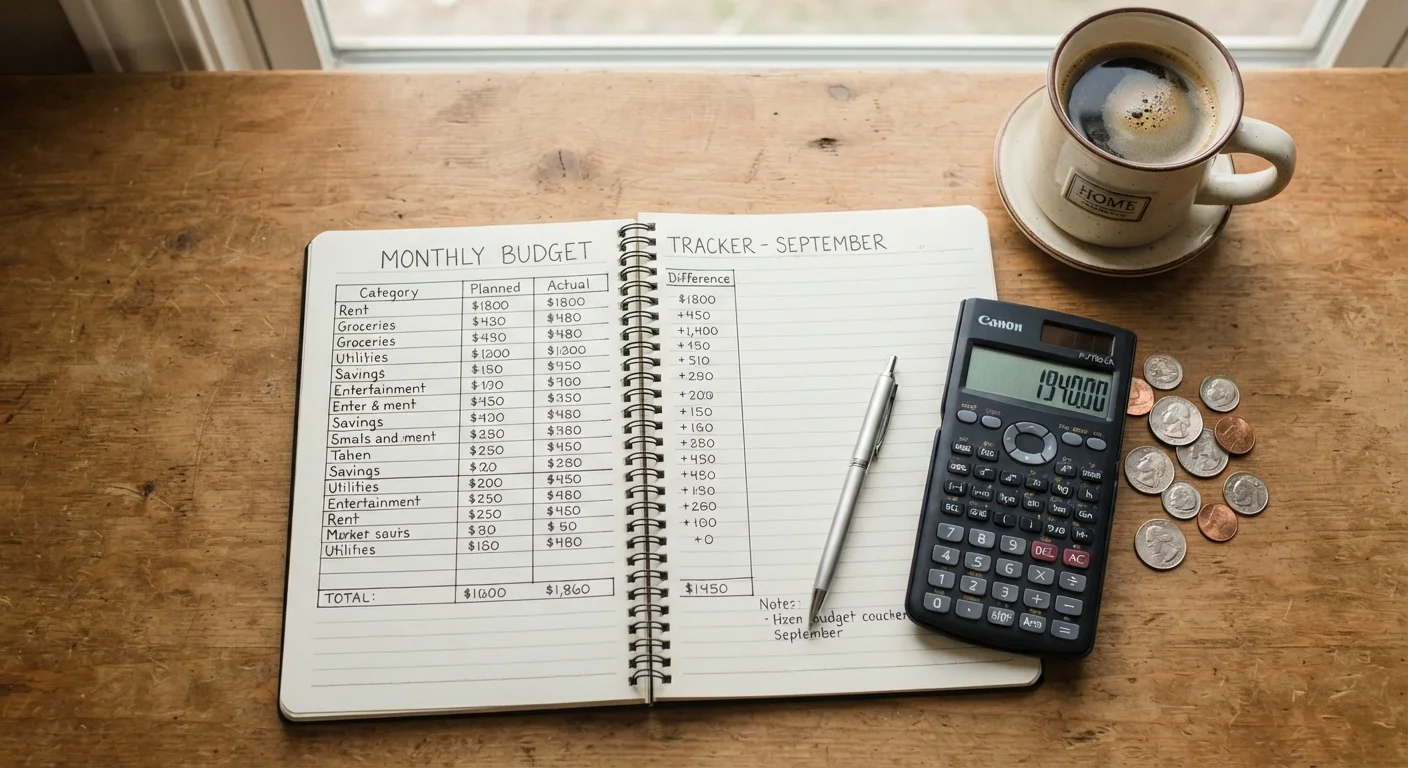
Photo credit: InsightsGrove.com | Discover Joy In Reading
In this article
From setting up a budget to handling emergencies and irregular months — a thorough, practical guide to managing your money day to day.
Key Takeaways
- Start with your actual take-home pay, not gross income, to avoid building a budget on phantom dollars.
- Fixed costs are your biggest lever — reducing them creates permanent room in every future month.
- A budget method only works if it matches your lifestyle; pick one you can maintain, not the most popular one.
- Irregular months are predictable in aggregate — plan for them with sinking funds built into your regular budget.
- A monthly review turns a budget from a static plan into a living financial tool.
Why Most Budgets Fall Apart
Most budget attempts fail within the first two months — not because of a lack of willpower, but because of structural problems nobody warned you about. The plan was too rigid, the income figure was wrong, or there was no system for what to do when something unexpected hit.
If you've tried budgeting before and quit, the issue is almost certainly architectural, not personal. Understanding why budgets collapse is the first step toward building one that actually holds. This guide gives you that structure — from the first number you write down to the end-of-month review that keeps it calibrated.
Build the System Before Cutting Spending
Trying to cut spending before you have a working budget is like patching a tire without knowing where the leak is. Get your categories mapped and your baseline numbers accurate first. Once the structure exists, you'll immediately see where cuts will have the most impact — and you won't have to guess.
Step One: Know Your Real Income
Your budget lives or dies on the accuracy of this first number. Use your net income — the amount that lands in your bank account after taxes, health insurance premiums, and any other automatic deductions. Using gross income inflates your available money and sets up shortfalls from day one.
If your income varies (freelance, hourly, tipped work), calculate a conservative baseline using your lowest three recent months. Budget to that floor. Any month you earn above it, you decide in advance where the extra goes — savings, debt, or a specific goal — rather than letting it evaporate.
54%
Americans living paycheck to paycheck
A 2023 LendingClub report found that roughly 54% of U.S. adults reported living paycheck to paycheck, including many with higher incomes.
$500–$1,000
Emergency fund starting target
Consumer financial educators commonly cite a small starter emergency fund as the first meaningful buffer against debt when unexpected costs arise.
3–6 months
Recommended full emergency fund coverage
The Consumer Financial Protection Bureau (CFPB) recommends three to six months of essential expenses as a mature emergency fund target.
Step Two: Map Your Spending Categories
Before you assign dollar amounts, list every category you actually spend in. Group them into two types:
- Fixed costs: Rent, loan payments, insurance, subscriptions — amounts that are the same or nearly the same each month.
- Variable costs: Groceries, gas, dining, clothing, entertainment — amounts that fluctuate with your choices.
Fixed costs deserve the most attention because they're the hardest to adjust in the short term but have the biggest long-term impact. Reducing recurring expenses systematically can free up more monthly cash than any coupon strategy. Additional tactics are covered in the Cutting Fixed Costs hub.
Unfamiliar with terms like sinking fund or discretionary spending? The plain-English budgeting glossary defines the vocabulary you'll encounter as you build this out.
Before assigning budget amounts, pull three months of actual bank and card statements and tally what you genuinely spent in each category — not what you think you spent. Most people underestimate variable spending by 20–30%.
Self-reported spending estimates are notoriously inaccurate. Real data from statements eliminates guesswork and sets realistic category targets from the start.
Set your savings or debt-payment transfer to trigger automatically within 24 hours of your paycheck hitting. Treating it like a bill — not a leftover — is what makes pay-yourself-first actually work.
Behavioral economics research consistently shows that automatic transfers sidestep the decision fatigue that causes people to spend money before they save it.
Step Three: Choose a Budgeting Method
There is no universally superior budgeting method. The right one is the one you'll consistently use. Here are the three most practical options for tight incomes:
- 50/30/20
- Allocate 50% of net income to needs, 30% to wants, 20% to savings and debt repayment. Simple and forgiving, but the percentages may not be realistic if rent alone exceeds 40% of your income — which is common in many U.S. cities.
- Zero-based budgeting
- Every dollar of income is assigned a purpose — expenses, savings, or debt — until the remaining balance is zero. Requires more upfront effort but leaves no money unaccounted for.
- Pay-yourself-first
- Transfer a set savings or debt-payment amount immediately when income arrives, then budget the remainder. Automates your priority without requiring perfect monthly discipline.
Whichever method you choose, value-based spending principles help you make better decisions within the variable portion of any budget. For broader day-to-day tactics, the Smart Shopping Habits hub is a practical companion resource.
Test a Method for 60 Days Before Switching
No budgeting method feels natural in month one — you're still learning where your estimates are off. Commit to any method for at least two full months before deciding it doesn't work. Most people who 'fail' at zero-based budgeting, for example, simply quit before they had enough data to calibrate their categories accurately.
Handling Irregular Months and Emergencies
The months that derail budgets most reliably are the ones with car registration fees, annual subscriptions, holiday spending, or a medical copay. These feel irregular, but most of them are actually predictable — you just haven't planned for them yet.
The solution is a sinking fund: a dedicated savings pool you contribute to monthly for known irregular expenses. Divide the annual cost of a known expense by 12 and add that amount to your monthly budget as a fixed line item. When the bill arrives, the money is already there.
True emergencies — job loss, sudden medical need, major car repair — require a separate emergency fund. Financial guidance from institutions like the Consumer Financial Protection Bureau (CFPB) generally suggests working toward three to six months of essential expenses, though even a modest $500 to $1,000 buffer meaningfully reduces the likelihood of going into debt when something unexpected hits.
Don't Raid Your Emergency Fund for Non-Emergencies
An emergency fund is specifically for true financial disruptions — job loss, medical costs, essential car repair. Using it for a vacation shortfall or holiday gifts defeats its purpose entirely. If you find yourself tempted to dip into it for predictable expenses, that's a signal you need a sinking fund for that category instead.
Building the Monthly Review Habit
A budget written once and never revisited is a wish list, not a financial tool. The review is where the real work happens: comparing what you planned to spend against what you actually spent, identifying the categories that consistently go over, and adjusting allocations before the next month begins.
Schedule 20–30 minutes at the end of each month. Use the end-of-month review checklist to work through each category systematically. Ask three questions for each line item: Did I stay within it? If not, why? Is the allocation realistic, or does it need to change?
Over time, this habit turns your budget from a rigid plan into an accurate, self-correcting picture of your financial life — one that gets easier to maintain precisely because it reflects how you actually live.
This article is for general informational and educational purposes only and does not constitute personalized financial advice. Consult a qualified financial professional for guidance specific to your situation.

Author
Smart Spending Editorial Team
Smart Spending Editorial Team is the collective byline for our editorial team and contributor network. Articles published under this byline or an editorial pen name are researched, written, and reviewed according to our editorial standards for clarity, consistency, and independence before publication.
View all articles →