
Tracking Every Pound You Spend: A Week-by-Week Habit Guide
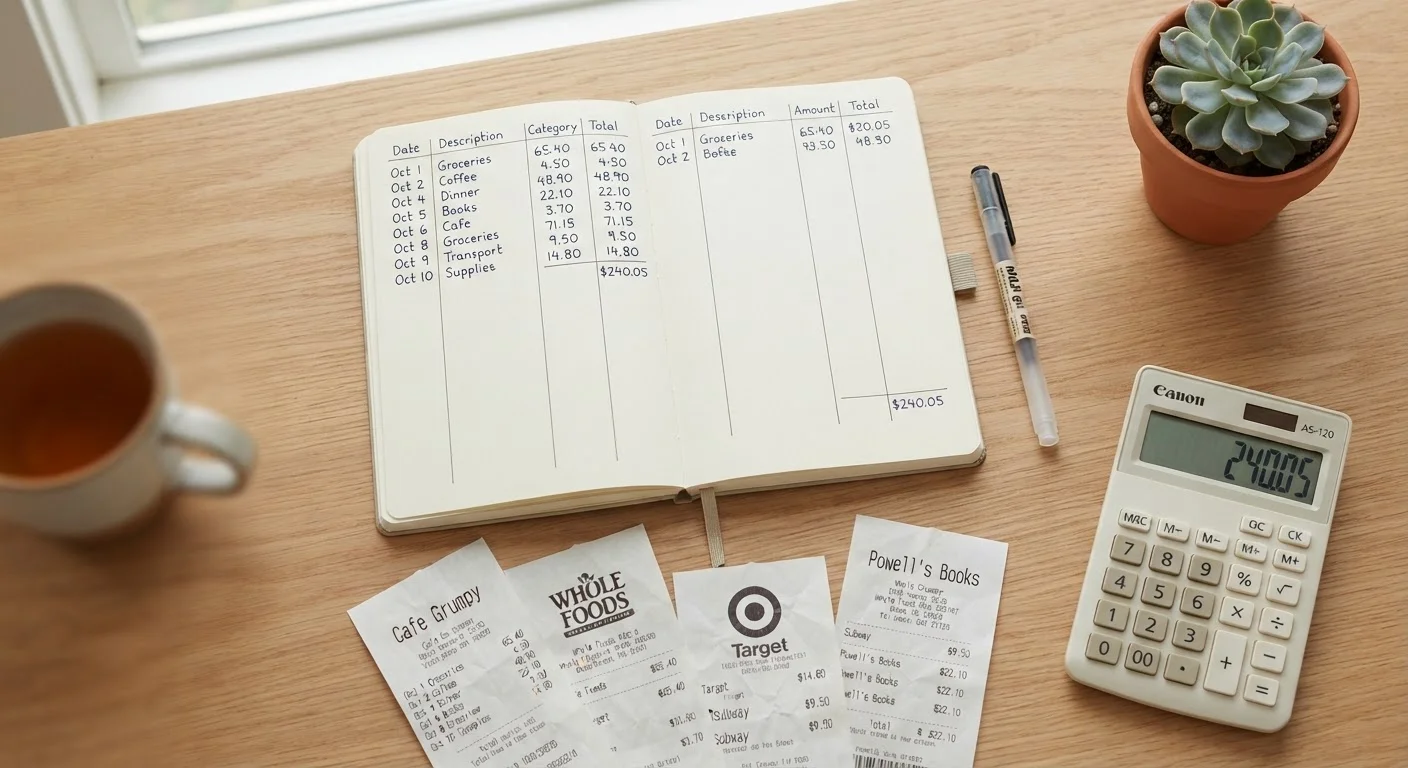
Photo credit: InsightsGrove.com | Discover Joy In Reading
In this article
Spending awareness starts with knowing where your money actually goes. Here's how to build a sustainable daily tracking habit in four weeks.
Key Takeaways
- Spending awareness — not restriction — is the first real step to controlling your finances.
- A four-week habit ramp-up makes daily tracking feel routine rather than burdensome.
- Paper, spreadsheets, or apps all work; consistency matters more than the tool you choose.
- Weekly reviews turn raw data into actionable insights about where money actually leaks.
- Small, repeated purchases are often the largest hidden drain on a tight income.
Why Most Tracking Attempts Fail Within Two Weeks
Spending trackers fail for a predictable reason: people try to reform their habits before they understand them. They open an app, feel briefly motivated, then abandon it when the data reveals uncomfortable truths or when logging feels like extra homework.
The fix is sequencing. Awareness has to come before behaviour change — not alongside it. This four-week guide is structured so that the first two weeks are purely observational. No targets, no restrictions, no guilt. You are building the habit of noticing before you build the habit of deciding.
If you have never put a formal budget together before, the complete everyday budgeting framework provides broader context for how daily tracking fits into managing money month to month.
What you will need
What You Need Before You Start
You do not need a premium app or a complex spreadsheet. The tools below cover every reliable approach — pick whichever creates the least friction for your daily life.
Small notebook or pocket journal
Records every transaction by hand throughout the day — no battery or data connection required.
Spreadsheet (e.g. Google Sheets or similar)
Organises spending into categories, calculates totals automatically, and stores a running monthly history.
Personal finance or budgeting app
Allows quick on-the-go logging, optional bank sync, and visual spending summaries.
Bank or card statements (online or paper)
Provides a verifiable record to cross-check your logged entries at the end of each week.
Make Logging Feel Frictionless
Keep your chosen tracking method — notebook, spreadsheet, or app — immediately accessible. If you use a phone app, place its icon on your home screen. If you prefer paper, keep a small notebook in your bag or jacket pocket. The lower the effort to log, the more likely the habit will stick through busy or low-motivation days.
Week 1 — Log everything, judge nothing
Your only job this week is to record every pound you spend, without trying to change anything yet. Log the amount, what it was for, and how you paid (card, cash, digital transfer). That is it. No categories, no totals — just raw capture.
The goal is to remove the psychological barrier of feeling like tracking is an audit. It is not. It is data collection. If you spent £4.50 on a coffee, log it. If you forgot to log something, add it when you remember. Imperfect records are still far more useful than none.
Week 1 Weekend — Cross-check against your bank statement
On Saturday or Sunday, open your bank or card statement and compare it against what you logged. Flag any transactions you missed or misremembered. Count how many gaps there were — not to criticise yourself, but to understand where your logging breaks down so you can fix it in Week 2.
Common gaps: contactless purchases under £5, recurring subscriptions charged mid-week, and cash withdrawals where the breakdown is lost.
Week 2 — Add spending categories
Continue logging every transaction, but now assign each one a simple category: food & drink, transport, bills & subscriptions, entertainment, personal care, other. Keep categories broad — overly granular systems collapse because they take too long to maintain.
At the end of Week 2, total each category. You now have a two-week snapshot of where your money actually goes, which is far more accurate than any estimate you could have made from memory.
Week 3 — Spot patterns, not problems
Review your two-week category totals and look for patterns rather than problems. Ask: Which category surprised me most? Where did I spend more than I expected? You are not making spending rules yet — you are building honest awareness.
Common patterns that emerge at this stage: daily food and drink purchases that exceed grocery bills, entertainment subscriptions that are rarely used, and transport costs that vary significantly by week. See also common spending habits that quietly drain budgets for context on repeated small purchases.
Continue logging throughout Week 3 with the same category system.
Week 3 Weekend — Set one intentional spending target
Based on your pattern review, choose one category where you want to be more intentional next week. Do not set a hard restriction — set an awareness target. For example: I will notice every time I spend on takeaway and log the reason. The act of pausing to log a reason is often enough to shift behaviour slightly.
Week 4 — Review, reflect, and build the monthly habit
By Week 4, logging should feel more automatic. This week, your focus is the monthly wrap-up: total all four weeks by category, compare Week 1 and Week 2 totals against Week 3 and Week 4, and note whether your intentional target category shifted even slightly.
Then ask two questions: What did I learn about my spending that I did not know before? and What would I do differently next month? Write both answers down. This reflection step is what separates one-time tracking experiments from durable habits.
Once your four-week baseline is established, you are ready to apply it to a formal budget. The step-by-step guide to building your first real budget is a natural next step. For an ongoing monthly rhythm, the end-of-month review checklist will help you recalibrate each month.
Sustaining the Habit Past the First Month
The four weeks above are a ramp — not the destination. Once tracking feels routine, the useful question shifts from am I logging? to what am I learning? Monthly patterns become visible after two or three months of consistent data, and that is when tracking starts to generate real financial leverage.
Evidence-backed budgeting habits designed for the long term are worth reviewing once you have a baseline month under your belt. For a practical look at how repeated small purchases compound over time, see shopping habits that quietly drain budgets.
Once fixed costs are on your radar, strategies for reducing recurring monthly bills can help you take the next step beyond day-to-day discretionary spending.
Don't Rely on Memory Alone
Most people significantly underestimate their spending when recalling it from memory. Research consistently shows that mentally reconstructed spending totals miss cash purchases, small digital transactions, and impulse buys. Log expenses the same day they happen — waiting until the weekend means you will almost certainly miss entries.
This Is General Financial Information
This article provides general educational guidance on personal spending habits. It is not personalised financial advice. For decisions about your specific financial situation, consider speaking with a qualified financial adviser or adviser registered with an appropriate regulatory body in your country.
This article is for general informational and educational purposes only. It does not constitute personalised financial advice. Consult a qualified financial professional for guidance specific to your circumstances.

Author
Smart Spending Editorial Team
Smart Spending Editorial Team is the collective byline for our editorial team and contributor network. Articles published under this byline or an editorial pen name are researched, written, and reviewed according to our editorial standards for clarity, consistency, and independence before publication.
View all articles →