
Countdown Timers, Low-Stock Warnings, and Other Urgency Tactics Explained
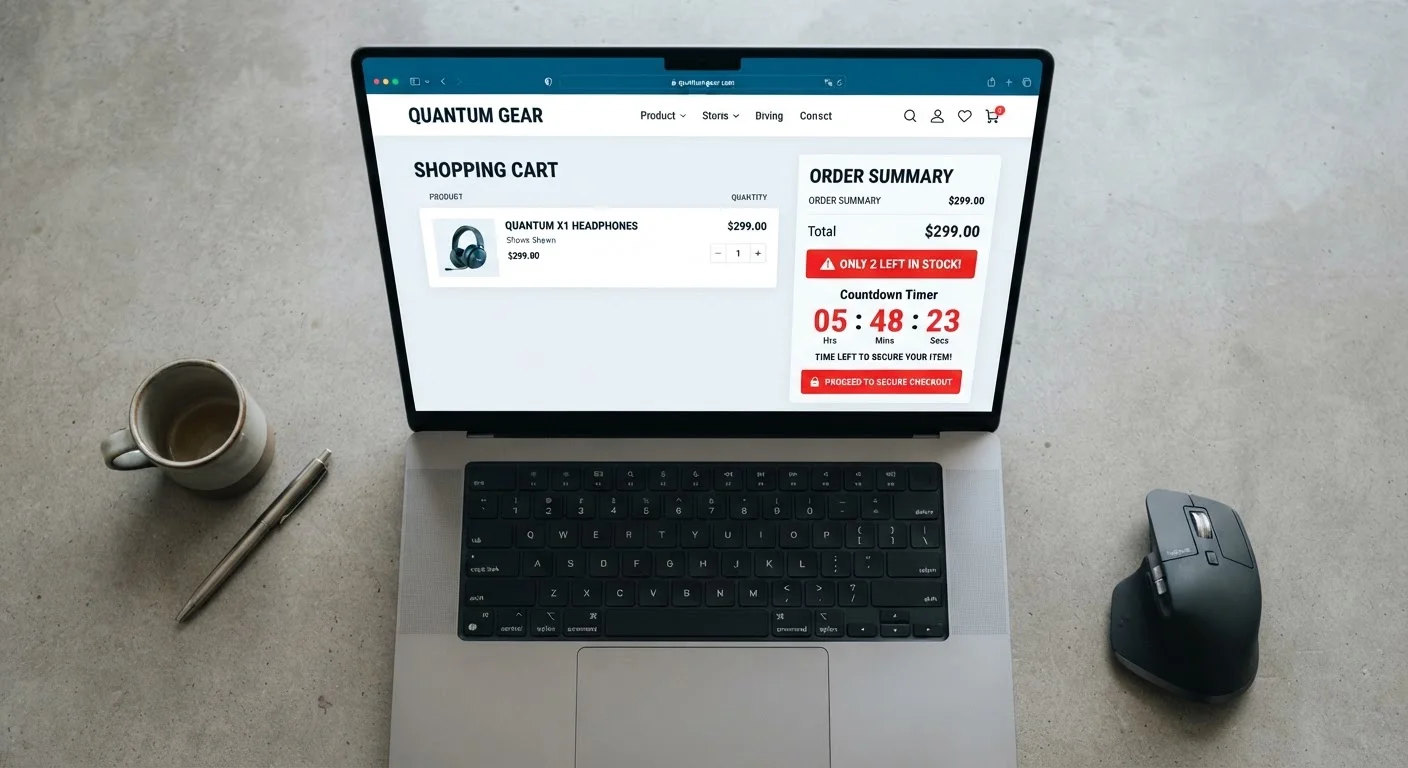
Photo credit: InsightsGrove.com | Discover Joy In Reading
In this article
Urgency cues are designed to rush your decision. Here's how each tactic works and when the pressure is real versus manufactured.
Key Takeaways
- Countdown timers often reset or recur, making them unreliable signals of a real deadline.
- Low-stock warnings may reflect inventory management strategy rather than actual shortage.
- Real scarcity is verifiable; manufactured scarcity relies on your inability to check.
- Pausing before purchasing is the most effective counter to urgency-based pressure.
- Price history tools can reveal whether a 'deal' price is genuinely unusual or routine.
How Urgency Cues Are Built Into the Shopping Experience
Urgency is not an accident of retail design - it is a deliberate architecture. Online stores layer multiple cues simultaneously: a ticking clock in the header, a stock counter near the add-to-cart button, a banner announcing the sale ends tonight. Each element targets the same cognitive mechanism: the discomfort of potential loss.
Understanding why urgency triggers impulsive decisions starts with recognizing that these are engineered stimuli, not neutral information. Retailers invest significantly in optimizing which cues drive conversion - the language, color, and placement are all tested. That optimization is not aligned with your interests as a buyer.
~60%
Shoppers who report urgency cues affect purchase decisions
Consumer behavior research consistently finds that a majority of online shoppers acknowledge scarcity and deadline cues influence their speed of purchase, even when they are aware of the tactic.
2-3x
Conversion lift from countdown timers in A/B tests
E-commerce optimization studies have reported that well-placed countdown timers can multiply purchase rates during a session, illustrating why retailers invest heavily in these design elements.
Countdown Timers: What They Signal and When to Trust Them
A countdown timer carries an implicit promise: when it hits zero, something changes - the price rises, the offer disappears, the window closes. That promise is sometimes kept and sometimes not.
Genuine deadline timers appear in flash sales with a published end time, site-wide promotional events tied to a calendar date, or checkout-session timers that hold a reserved item for a fixed window. These represent real operational constraints.
Evergreen timers - ones that reset when you reload the page, clear your cookies, or return the following day - carry no actual deadline. They use the visual grammar of urgency without the underlying reality. A simple test: note the time displayed, reload the page, and check whether it has reset.
Test the Timer Before It Tests You
Before responding to a countdown timer, reload the page and note whether the clock resets to its starting value. If it does, the timer is a persistent design element with no real deadline attached. You can also check back the following day - if the 'expiring' price is still available, the urgency was manufactured.
Low-Stock Warnings: Scarcity Claims Under Scrutiny
'Only 3 left in stock' is one of the most effective urgency signals in e-commerce. It is also one of the least verifiable. Retailers control what their inventory display system shows the customer, and that display does not have to reflect a direct, real-time warehouse count. Thresholds can be set deliberately low - the system may show 'low stock' at 50 units remaining, or the counter may be hardcoded to create a perception of scarcity regardless of actual inventory.
That said, genuine low-stock situations exist, particularly for niche or seasonal products, limited physical runs, or items that are being discontinued. The relevant question is: does this product's history and context support a real scarcity claim? For a mass-market item sold by a large retailer, skepticism is warranted. For a small-batch handmade product from an independent seller, it may be accurate.
These tactics fit into a broader ecosystem of psychological pricing strategies retailers deploy - understanding the full picture helps you evaluate each cue on its own terms.
Social Proof Urgency: Viewers, Buyers, and Real-Time Activity
A distinct category of urgency cues uses social proof rather than time or stock: 'Currently 18 people viewing this item,' 'Purchased 34 times in the last 24 hours,' or 'Someone in Chicago just bought this.' These signals borrow the logic of crowd behavior - if others are acting, perhaps you should too.
The figures displayed are often accurate to some degree, but selectively presented. A product page might show peak viewing numbers from a promotional period, or the time window for 'recent purchases' may be deliberately broad. The intent is to manufacture competitive pressure rather than to inform your decision.
Social Proof Figures Are Presented Selectively
Platforms are not required to disclose the methodology behind 'X people viewing this' or 'sold Y times recently' claims. The time window, data source, and display thresholds are all at the retailer's discretion. Treat these figures as marketing signals rather than neutral inventory data.
When the Pressure Is Real: Distinguishing Genuine Constraints
Not every urgency signal is manufactured. Real constraints include: end-of-season clearance items that will not be restocked, pre-order windows with hard cutoffs, or event-based pricing tied to a verifiable schedule. In these cases, the deadline or scarcity is structural, not cosmetic.
The practical distinction is verifiability. Real constraints can be cross-referenced - a sale tied to a public event, a stock level that independent reviewers confirm is low, a promotional window announced in advance with consistent terms. Manufactured constraints resist verification because verification would undermine them.
If you are evaluating whether a deal is genuinely time-sensitive, price tracking tools can show whether the current price is historically unusual or simply the product's standard going rate dressed up in sale language. This is also worth reading alongside how anchor pricing can make routine prices look like discounts.
This article is for general informational and educational purposes. It does not constitute financial or legal advice. Readers should verify relevant regulations and consult qualified professionals for decisions specific to their circumstances.
Frequently Asked Questions

Author
Savvy Shopping Editorial Team
Savvy Shopping Editorial Team is the collective byline for our editorial team and contributor network. Articles published under this byline or an editorial pen name are researched, written, and reviewed according to our editorial standards for clarity, consistency, and independence before publication.
View all articles →