
Headphone Types Compared: Over-Ear, On-Ear, and In-Ear
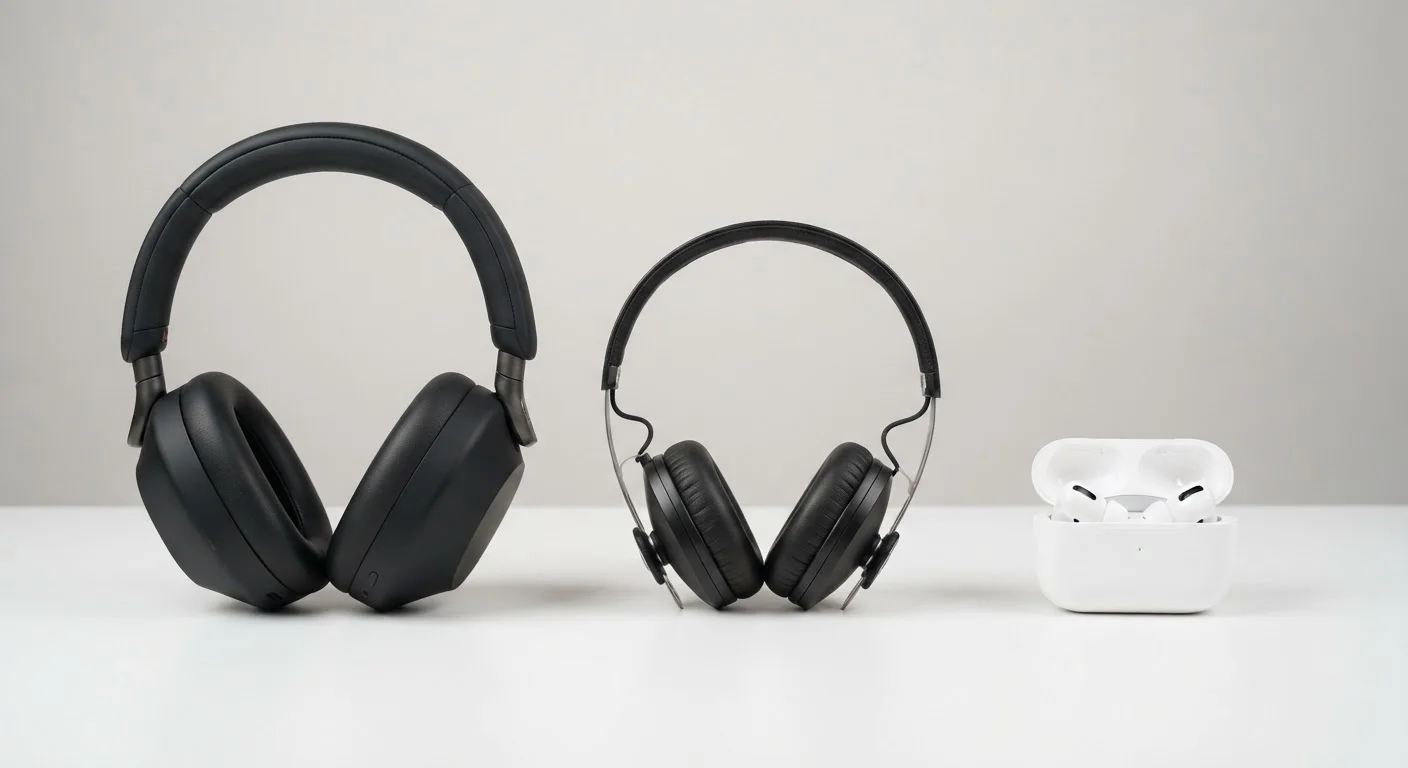
Photo credit: InsightsGrove.com | Discover Joy In Reading
In this article
Each headphone form factor has genuine trade-offs. This guide maps them to use cases so you can choose with confidence.
Key Takeaways
- Over-ear headphones generally deliver the best sound isolation and audio quality but are the least portable.
- On-ear headphones balance portability and sound quality but can cause discomfort during long listening sessions.
- In-ear headphones are the most portable and affordable option, though audio depth is typically more limited.
- Your primary use case - commuting, studio work, gym - should drive the form factor decision.
- Noise cancellation (ANC) is available across all three types but performs most effectively in over-ear designs.
What Actually Separates These Three Form Factors
The physical design of a headphone isn't just about looks - it directly determines sound quality, comfort, isolation, and portability. Understanding the mechanical differences helps you predict real-world performance before spending a dollar.
Over-ear (circumaural): The ear cups completely surround the ear, creating a sealed or semi-open chamber. Larger drivers (the speaker elements inside) fit comfortably, which generally allows for fuller bass response and better passive noise isolation.
On-ear (supra-aural): The ear cups rest directly on the outer ear rather than enclosing it. The design is more compact than over-ear but creates a tighter pressure point, which some listeners find uncomfortable over time.
In-ear (IEM/earbuds): Drivers sit inside or at the entrance of the ear canal. Sound quality depends heavily on fit - a poor seal dramatically reduces bass and isolation. Tip material (silicone vs. foam) makes a meaningful difference here. For a deeper look at what specs actually matter in this category, see our guide to wireless earbud specs.
| Over-Ear | On-Ear | In-Ear | |
|---|---|---|---|
| Portability | Low - bulky, limited foldability | Medium - folds, still noticeable | High - pocket-sized, ultra-light |
| Passive Noise Isolation | High (closed-back models) | Medium - partial seal only | Medium - depends heavily on fit |
| Comfort Over Time | High - distributes pressure well | Low to medium - ear pressure | Variable - canal-dependent |
| Sound Stage & Bass | Widest, most room for tuning | Narrower, less bass depth | Compact; bass relies on seal |
| Exercise Suitability | Poor - shifts, traps heat | Fair - better than over-ear | Good - light and stable with fins |
| Typical Price Range | Widest range, higher floor | Mid-range to budget | Broadest budget options |
Comfort, Portability, and Long-Term Wearability
Comfort is where personal variation matters most, but some patterns hold across most listeners.
Over-ear headphones distribute clamping force across a larger area, which typically feels better over multi-hour sessions - provided the headband padding is adequate. The trade-off is bulk: most over-ear models don't fold flat enough for a jacket pocket.
On-ear headphones compress directly against the outer ear cartilage. Many people find them fine for 30-60 minutes but fatiguing beyond that. They fold more compactly than over-ear designs and generally weigh less.
In-ear options are the clear portability winner. They fit in any pocket, most weigh under an ounce, and they're the only format practical for high-intensity exercise (assuming a secure ear tip or wing). The comfort ceiling, however, depends entirely on ear canal anatomy - some people find any in-ear option uncomfortable regardless of tip size.
Test Ear Tips Before You Commit
If you're considering in-ear headphones, try multiple tip sizes before settling on a pair. A proper seal isn't just about comfort - it's the single biggest factor affecting bass response and passive isolation. Many manufacturers include three or four tip sizes in the box; foam tips generally provide a better seal than silicone for most ear shapes.
Sound Quality and Noise Isolation: Realistic Expectations
Driver size correlates loosely with sound quality, but it's not the whole story. Tuning, materials, and engineering matter as much as raw dimensions.
Over-ear headphones have the most room for larger drivers and acoustic chambers, which gives engineers more flexibility to shape frequency response. Closed-back over-ear models also provide the strongest passive noise isolation of the three types - relevant whether you're blocking out a noisy office or preventing sound leakage in a library.
On-ear models land in the middle. Their smaller drivers and imperfect seal mean less bass extension and more sound leakage compared to closed-back over-ear designs, but they're still a step above most in-ear options at equivalent price points.
In-ear headphones can achieve impressive sound quality - particularly at higher price points - but the listening experience is more dependent on proper fit than with the other formats. Active noise cancellation (ANC) is available across all three categories, but the physics of the over-ear seal gives ANC algorithms more to work with, generally producing better low-frequency attenuation.
~40 dB
Passive isolation of closed-back over-ear headphones
Closed-back over-ear designs can attenuate ambient sound by roughly 30-40 dB passively, according to acoustic engineering principles - more than most in-ear or on-ear alternatives.
~6 mm-40 mm
Typical driver size range across headphone types
In-ear drivers typically range from 6-14 mm; on-ear from 30-40 mm; over-ear from 40 mm and above - larger drivers generally allow more low-frequency reproduction flexibility.
Choosing by Use Case and Budget
Once you know the trade-offs, the decision usually becomes straightforward when you anchor it to your actual listening habits.
- Stationary home or office use: Over-ear designs are worth the bulk. You get the best isolation, longest comfort window, and most consistent sound quality.
- Commuting or travel: On-ear models fold down and block ambient noise better than open in-ears. If you're considering whether to buy online or in a store, our practical comparison of shopping channels can help you decide where to evaluate them first.
- Workouts and active use: In-ear wins here - over-ear and on-ear models shift during movement and trap heat. Look for ear tips or fins designed to stay secure.
- Budget shopping: In-ear headphones offer the most options at low price points. Diminishing returns set in quickly with over-ear models at the budget tier, where build quality and driver tuning often suffer.
Whatever format you're drawn to, prioritize trying the fit before committing - or confirm a clear return window when buying remotely.

Author
Savvy Shopping Editorial Team
Savvy Shopping Editorial Team is the collective byline for our editorial team and contributor network. Articles published under this byline or an editorial pen name are researched, written, and reviewed according to our editorial standards for clarity, consistency, and independence before publication.
View all articles →