
Wireless Earbuds: What the Spec Sheet Won't Tell You
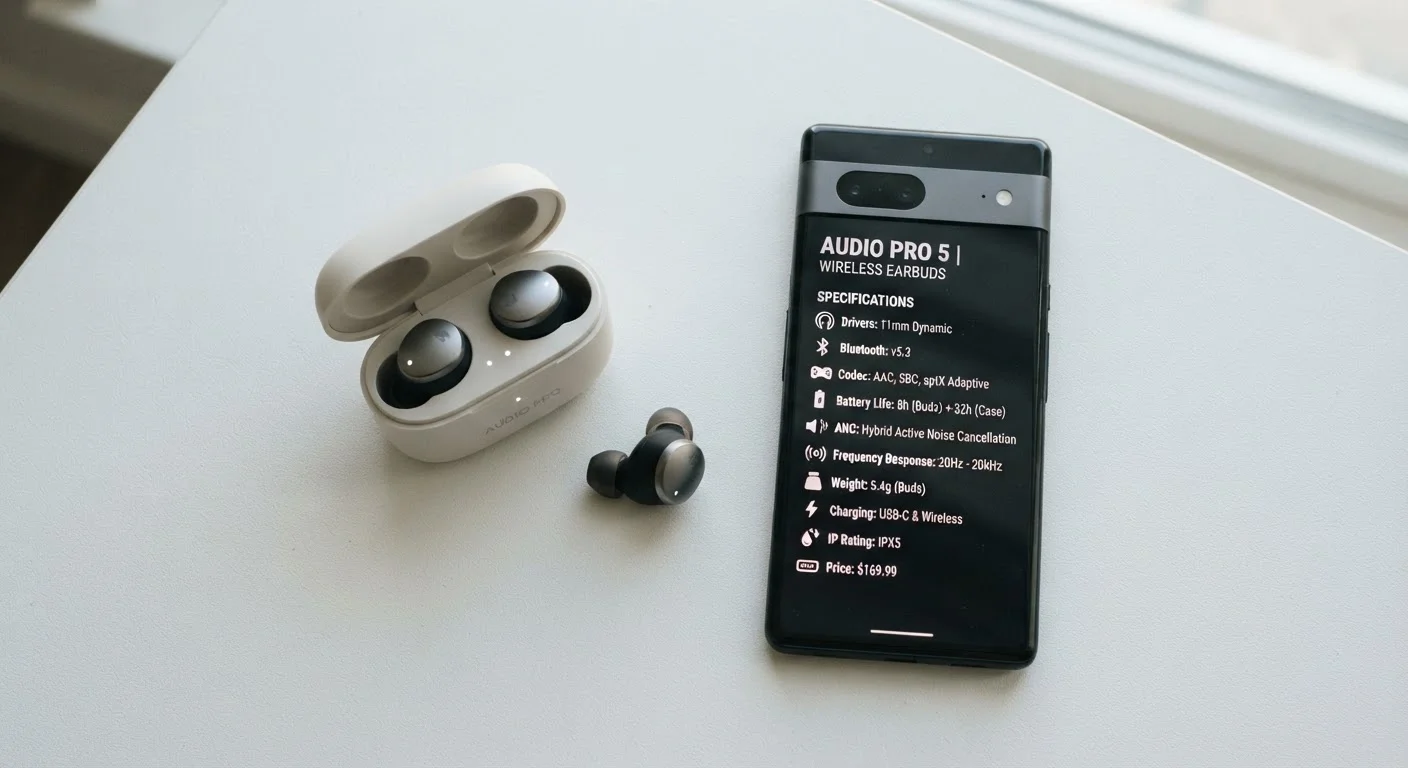
Photo credit: InsightsGrove.com | Discover Joy In Reading
In this article
Driver size, codec support, and noise cancellation explained — so you know what to look for beyond the marketing copy.
Key Takeaways
- Driver size alone does not determine sound quality - tuning and materials matter more.
- Codec support only improves audio quality if both your device and the earbuds share the same codec.
- ANC effectiveness varies significantly by fit and ear canal geometry, not just the spec sheet rating.
- Battery life figures are measured at low volumes in ideal conditions - real-world use will differ.
- Frequency response ranges are nearly meaningless without an accompanying graph showing actual response curves.
- Define what matters to your listening habits before evaluating any spec.
Why Spec Sheets Are Designed to Impress, Not Inform
Earbud spec sheets are marketing documents first and technical references second. Manufacturers select the figures that present their product favorably - and omit the ones that complicate the story. Understanding which numbers carry real weight and which are essentially decoration will save you from paying a premium for specs that don't translate to better listening.
This isn't unique to audio. As covered in our guide on what product specifications actually tell you, spec sheets can mislead as easily as they inform across any product category. Earbuds are one of the more egregious examples because the variables affecting sound quality are deeply subjective and hard to capture in a single number.
20Hz-20kHz
Standard human hearing frequency range
Most earbuds list this exact range on spec sheets - but without a response curve graph, the figure conveys no useful performance information.
20-40%
Typical real-world battery life reduction
Using ANC and higher volumes commonly reduces usable battery time well below the manufacturer's published figure, which is measured under controlled low-volume conditions.
IPX4
Most common water resistance rating on earbuds
IPX4 indicates splash resistance and is the baseline for sweat-tolerant earbuds, though it does not guarantee protection against immersion or salt-containing sweat over time.
The Three Specs People Overweight
Driver Size
Driver diameter (usually measured in millimeters) tells you the size of the tiny speaker inside each earbud. Bigger drivers can move more air, which can improve bass response - but only if the acoustic chamber is well-designed and the driver is well-tuned. A 10mm driver with thoughtful engineering will outperform a 12mm driver in a poorly constructed housing every time. Don't use it as a proxy for quality.
Frequency Response Range
The standard human hearing range is roughly 20Hz to 20,000Hz. Most earbuds list a range like "20Hz-20kHz" - which tells you almost nothing about actual audio performance. What matters is how flat or shaped the response curve is across that range. Without seeing a frequency response graph (available on audio measurement databases), the range alone is not useful data.
Total Harmonic Distortion (THD)
THD measures how much the audio signal degrades at a given volume. Lower is better, but the spec is only meaningful if the measurement conditions are disclosed. A THD figure measured at low volume may look impressive while masking distortion problems at higher playback levels.
Find Independent Frequency Response Graphs
Audio measurement databases and reviewer sites that publish raw frequency response graphs give you far more actionable data than any spec sheet. A graph showing a large dip at 3kHz tells you something real; a listed range of '20Hz-20kHz' tells you almost nothing. Search for independent measurements before making a decision based on published specs alone.
Codec Support: When It Matters and When It Doesn't
Bluetooth codecs govern how audio is compressed and transmitted from your device to your earbuds. SBC is the universal fallback - all Bluetooth devices support it. AAC is commonly used on Apple devices. aptX, aptX HD, and LDAC are higher-fidelity codecs that transmit more audio data per second.
The catch: both your source device and your earbuds must support the same codec for you to benefit from it. If your phone only outputs AAC, LDAC support in your earbuds is irrelevant. Before treating codec support as a differentiating factor, verify what your primary listening device actually transmits. Codec support can also vary by operating system - the same phone model on different firmware versions has been known to behave differently.
For most compressed streaming audio (which is already lossy), the audible difference between codecs is debated among audio engineers. Codec matters most when you're streaming lossless audio from a compatible source.
Active Noise Cancellation: Fit Beats Spec Every Time
ANC ratings - often expressed as decibel reduction - are measured in standardized lab environments using a standard ear simulator. Your ear canal is not a standard ear simulator. The seal between the earbud tip and your ear is the single biggest variable in how well noise cancellation performs for you personally.
Earbuds that fit your ear poorly will underperform their spec rating significantly. Before assessing ANC effectiveness, confirm that you're using the correct ear tip size. Most earbuds ship with multiple sizes for this reason. If none of the included tips create a snug seal, third-party foam tips are a commonly used alternative.
Also note that ANC modes vary by design: some prioritize ambient sound passthrough (useful for outdoor safety), others prioritize full isolation. Make sure the mode structure matches how you intend to use the earbuds. For a broader comparison of how in-ear designs handle isolation versus comfort, see our headphone types comparison guide.
Building a Smarter Evaluation Framework
Before you start parsing spec sheets, identify what actually matters for your use case. Commuters who need isolation have different priorities than people listening at a desk. Gym users need durability and secure fit. Audiophiles streaming lossless files care about codecs in a way casual podcast listeners simply don't.
Our guide on building your own evaluation criteria walks through how to define your priorities before researching any product - a habit that prevents you from being swayed by impressive-sounding specs you'll never use.
The specs worth tracking are battery life (with ANC on and off noted separately), IP rating (matched to your actual environment), and codec support (checked against your specific device). Everything else should be confirmed through independent measurements or hands-on testing reports from audio-focused reviewers who publish measurement data alongside their assessments.
This article is for general informational and educational purposes. Specifications and features described reflect general industry patterns and may vary by product and manufacturer.
Frequently Asked Questions

Author
Savvy Shopping Editorial Team
Savvy Shopping Editorial Team is the collective byline for our editorial team and contributor network. Articles published under this byline or an editorial pen name are researched, written, and reviewed according to our editorial standards for clarity, consistency, and independence before publication.
View all articles →