
Buying Kitchen Knives Without Wasting Money on the Wrong Set
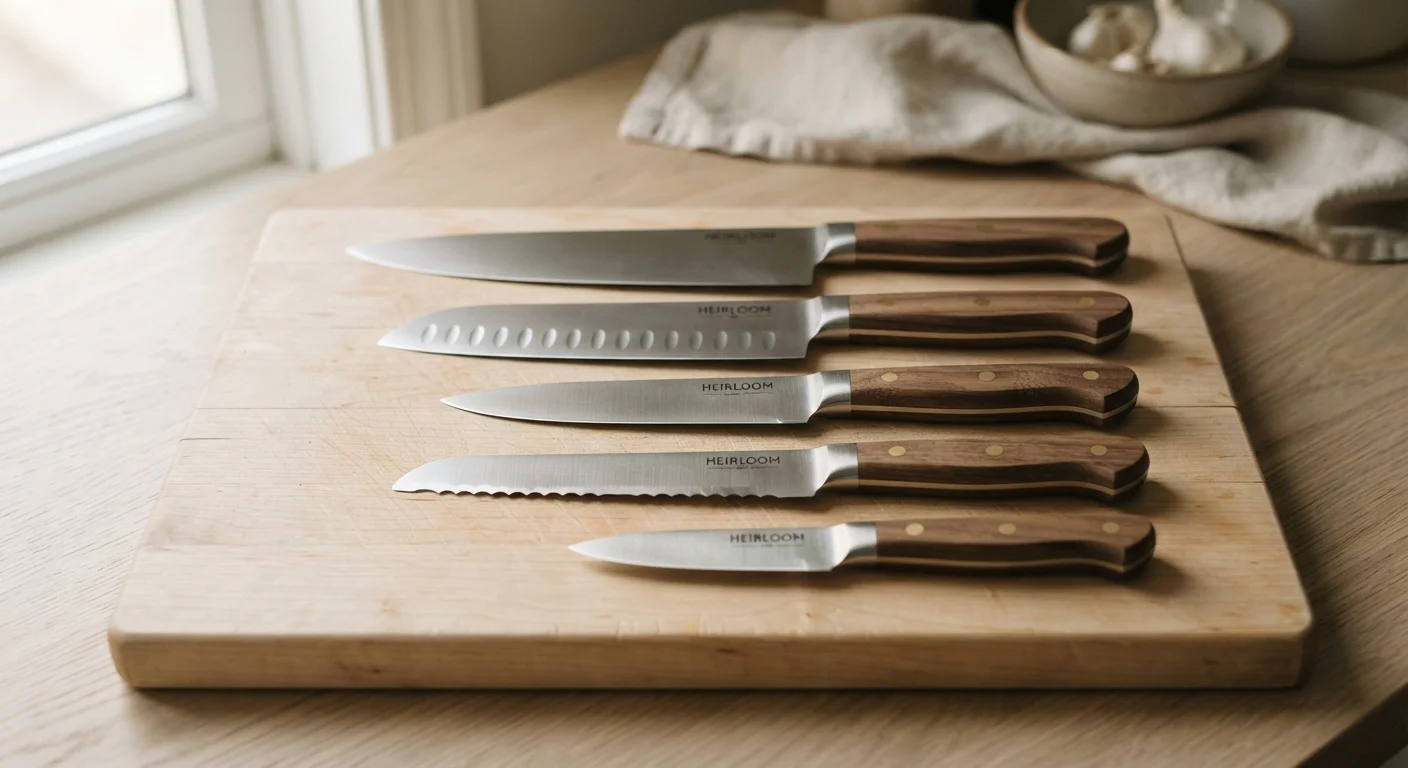
Photo credit: InsightsGrove.com | Discover Joy In Reading
Most home cooks need fewer knives than they think. Learn what steel grades, handle types, and blade shapes actually matter.
Key Takeaways
- Most home cooks need only three knives: a chef's knife, a paring knife, and a serrated bread knife.
- Steel grade and edge geometry matter more than brand name or aesthetic packaging.
- A knife you maintain properly will outperform an expensive one you neglect.
- Block sets often bundle low-use knives that inflate price without adding practical value.
- Handle comfort and blade balance are personal - always factor in how a knife feels in hand.
Why Most Knife Purchases Go Wrong
Kitchen knives are one of the most over-purchased and under-researched items in a home cook's toolkit. The market is flooded with block sets, celebrity-endorsed collections, and premium imports - and most of it is noise. The shopping myth that more expensive means better quality is nowhere more prevalent than in the cutlery aisle.
The core problem is that buyers rarely define what they actually need before shopping. Without that foundation, it's easy to spend heavily on a 14-piece set where half the knives never leave the block. This article breaks down the specific mistakes that lead to wasted money - and what to do instead.
Buying a large block set instead of individual knives.
Why it happens: Block sets appear to offer value through volume, and marketing positions them as a complete solution for any kitchen task.
Prioritizing aesthetics over steel quality and edge geometry.
Why it happens: Beautiful handles and sleek packaging are persuasive at the point of purchase, but neither affects how a knife cuts.
Neglecting sharpening and maintenance after purchase.
Why it happens: Many buyers assume a knife stays sharp indefinitely or that dullness is a sign it needs replacing rather than honing.
Ignoring handle fit and blade balance when choosing a knife.
Why it happens: Online purchasing makes it impossible to hold a knife before buying, so shoppers default to reviews and ratings without accounting for personal ergonomics.
Using the wrong knife for the task, then blaming the knife.
Why it happens: Without knowing which knife suits which task, cooks use a chef's knife for everything - including jobs better suited to a paring or serrated blade.
What to Actually Evaluate Before You Buy
Once you know which knives you need, focus on three technical criteria: steel hardness, edge angle, and handle construction. These specs are usually available in product listings and give you real signal about performance.
3
Knives most home cooks actually need
Culinary educators broadly agree a chef's knife, paring knife, and serrated knife cover roughly 95% of home cooking tasks.
HRC 56-62
Typical hardness range for quality kitchen steel
The Rockwell Hardness scale (HRC) indicates edge retention; most reliable kitchen knives fall within this range, balancing sharpness and chip resistance.
Steel hardness (HRC): Higher HRC means a harder steel that holds an edge longer, but it's also more prone to chipping if dropped or used on hard surfaces. Lower HRC steel is tougher and easier to resharpen at home. Neither is universally superior - match the steel to your maintenance habits.
Edge angle: Western-style knives are typically ground to 20-22 degrees per side; Japanese-style knives often go to 15 degrees or less, producing a finer, more precise cut. Thinner edges require more careful use and storage.
Handle construction: Full-tang knives - where the blade steel extends the full length of the handle - are generally more durable and better balanced than partial-tang designs. This is worth verifying in product specs.
Don't Mistake Price for Performance
A higher sticker price does not guarantee a better cutting edge or longer-lasting steel. Many mid-range knives use the same steel grades as pricier options while adding unnecessary design markup. Evaluate specifications - steel type, hardness rating (HRC), and edge angle - not packaging or prestige.
Knives are tools that interact directly with your food prep habits. If you're working on eating well on a tight budget, the right knife setup can make home cooking faster and less frustrating - which matters when you're preparing meals from scratch regularly. And since good knife skills reduce waste, they also connect directly to reducing food waste at home.
Avoid Dishwashing Your Knives
Dishwasher detergent is abrasive, and the high heat causes handles to crack and blades to corrode faster. This single habit degrades even well-made knives rapidly. Always hand-wash and dry immediately after use - it takes ten seconds and meaningfully extends blade life.
For broader guidance on spending smarter across everyday purchases, the Smart Shopping Habits hub covers tactics that apply well beyond the kitchen.

Author
Savvy Shopping Editorial Team
Savvy Shopping Editorial Team is the collective byline for our editorial team and contributor network. Articles published under this byline or an editorial pen name are researched, written, and reviewed according to our editorial standards for clarity, consistency, and independence before publication.
View all articles →