
Soil, Potting Mix, and Garden Compost: What Each One Is Actually For
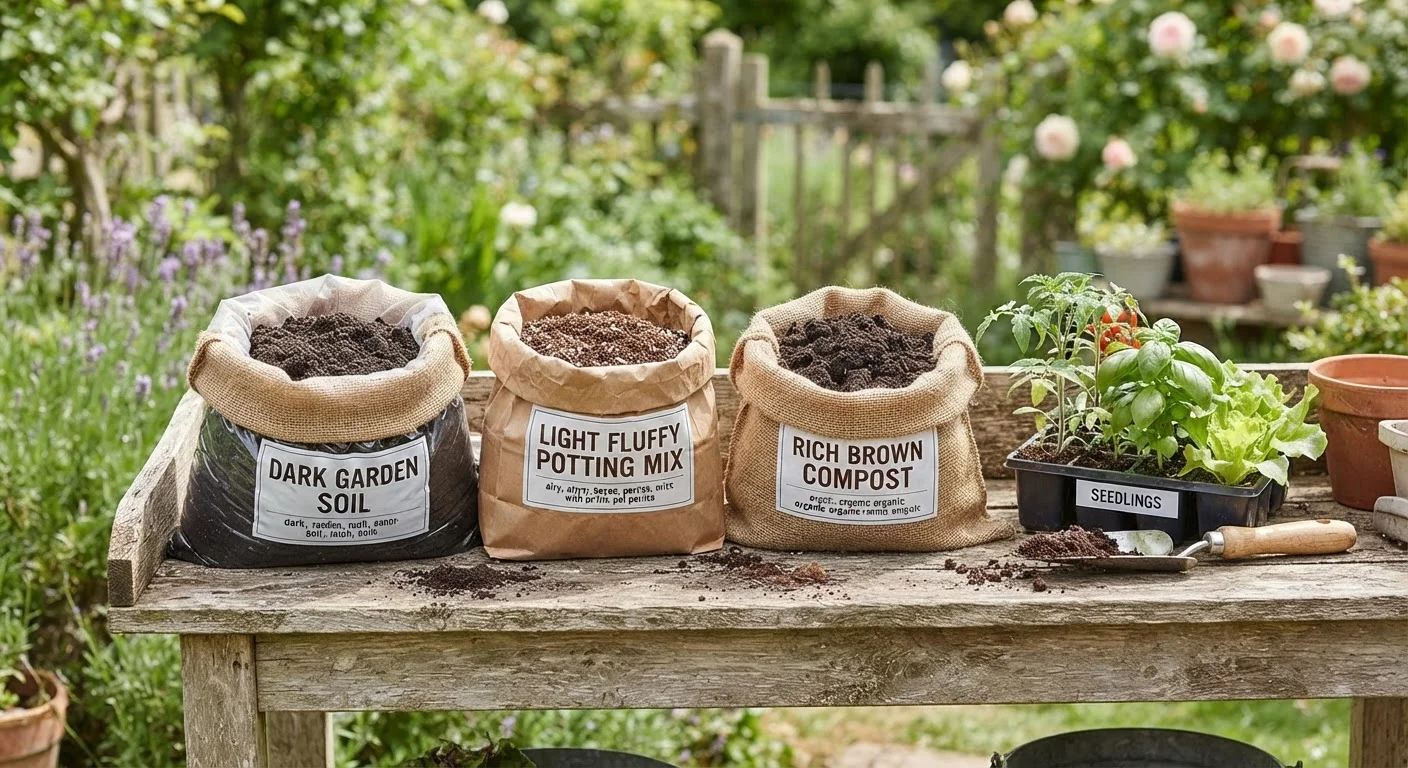
Photo credit: InsightsGrove.com | Discover Joy In Reading
In this article
Confused by the bags at the garden centre? Here's a plain-language guide to what soil, potting mix, and compost do and when to use each.
Why the Bags Look the Same but Aren't
Walk down the garden centre aisle and you'll see a wall of brown bags all promising healthy plants. The labels - garden soil, potting mix, compost, raised bed mix, planting soil - blur together fast. Using the wrong one doesn't just waste money; it can genuinely harm plants. This guide cuts through the confusion so you buy only what you actually need.
| Garden soil - primary use | In-ground beds and large landscape patches |
| Potting mix - primary use | Containers, pots, window boxes, and hanging baskets |
| Compost - primary use | Soil amendment; blended in, not used alone |
| Potting mix lifespan | 1-2 growing seasons before refresh needed |
| Typical compost application depth | 2-4 inches worked into the top layer per season |
| Garden soil in containers | Not recommended - compacts and restricts drainage |
See our breakdown of real garden startup costs to understand where soil products fit in your overall budget before you shop.
Garden Soil: For Ground-Level Beds Only
Garden soil is blended to be worked into existing ground. It's heavier than other products because it contains mineral particles - typically sand, silt, and clay - mixed with some organic matter. That weight is a feature, not a flaw: it anchors roots in in-ground beds and integrates with the native soil below.
Where it works well: raised in-ground beds, filling large holes, amending an existing patch before planting vegetables or perennials.
Where it fails: in containers. Garden soil compacts in pots, restricts drainage, and can suffocate roots. It's also too heavy for window boxes or hanging baskets. If you've ever had a potted plant struggle despite regular watering, compacted garden soil is often the culprit.
Garden soil
A blended mix containing mineral particles (sand, silt, clay) and some organic matter. Designed to be incorporated into existing ground-level beds, not used in containers.
Potting mix
A lightweight, container-specific growing medium made from organic materials like peat or coco coir and aerating agents like perlite. Formulated for drainage and root health in pots.
Compost
Decomposed organic matter used to improve soil structure and fertility. It is a soil amendment, not a standalone growing medium, and is typically mixed into existing soil or potting mix.
Perlite
A lightweight volcanic mineral added to potting mixes to improve aeration and prevent compaction. It appears as small white particles throughout the mix.
Soil amendment
Any material added to soil to improve its physical or chemical properties - drainage, aeration, nutrient content, or moisture retention. Compost is one of the most common examples.
Coco coir
A fibrous material made from coconut husks, used as a sustainable alternative to peat moss in potting mixes. It holds moisture well while still allowing good drainage.
Potting Mix: Engineered for Containers
Potting mix (also sold as potting soil, though it contains little or no actual soil) is formulated specifically for container growing. The key ingredients - typically peat moss or coco coir, perlite, and sometimes bark - create a structure that stays loose, drains freely, and holds just enough moisture for roots to access between waterings.
Use potting mix in: houseplants, outdoor pots, window boxes, hanging baskets, and seed-starting trays. It's worth spending on quality here - a well-draining mix prevents the root rot and overwatering problems that kill more container plants than any pest.
Potting mix breaks down over one to two growing seasons. Refreshing containers annually with new mix - or blending in compost - restores the loose texture that makes it work.
Garden Compost: A Soil Amendment, Not a Growing Medium
Compost is decomposed organic matter - kitchen scraps, yard waste, manure - that has broken down into a dark, crumbly material rich in nutrients and beneficial microorganisms. It is not a standalone growing medium. Plants don't grow well in pure compost because it's too nitrogen-dense and can dry into a crust.
What compost does: it feeds soil biology, improves drainage in clay soils, increases water retention in sandy soils, and slowly releases nutrients as microbes continue breaking it down. Think of it as a soil improver, not a soil replacement.
Typical application rates run around 2-4 inches worked into the top layer of an in-ground bed each season, or up to 20-30% by volume blended into potting mix for containers. Home composting is one of the most cost-effective ways to maintain garden health year after year - pairing it with smart watering habits compounds the benefit further.
Home Composting Cuts Costs Over Time
Bagged compost is a recurring expense if you use it regularly. Setting up a basic compost bin using kitchen scraps and yard waste produces a continuous supply at minimal cost - mainly the time to turn the pile occasionally. Most municipalities also offer free or subsidised compost through waste-reduction programmes, so check your local council or public works website before buying bags.
Quick Decision Guide: Which One Do You Need?
Here's the short version when you're standing in the aisle:
- In-ground bed or lawn patch: garden soil or a mix of garden soil and compost.
- Pot, container, or window box: potting mix only.
- Improving an existing bed: compost, worked in or spread as a top dressing.
- Raised bed (above ground, no soil contact): a purpose-blended raised bed mix, or combine potting mix with compost in roughly equal parts.
- Starting seeds indoors: a fine-textured seed-starting mix - lighter than standard potting mix and low in fertilizer, which seedlings don't need yet.
Buying the right product from the start means fewer failed plants and fewer repeat purchases - a direct saving that adds up across a season. For a fuller picture of where garden spending goes, the real costs of starting a garden article is worth a read before your next garden centre trip.

Author
Home & Living Editorial Team
Home & Living Editorial Team is the collective byline for our editorial team and contributor network. Articles published under this byline or an editorial pen name are researched, written, and reviewed according to our editorial standards for clarity, consistency, and independence before publication.
View all articles →