
The Nutritional Case for Pulses, Grains, and Legumes
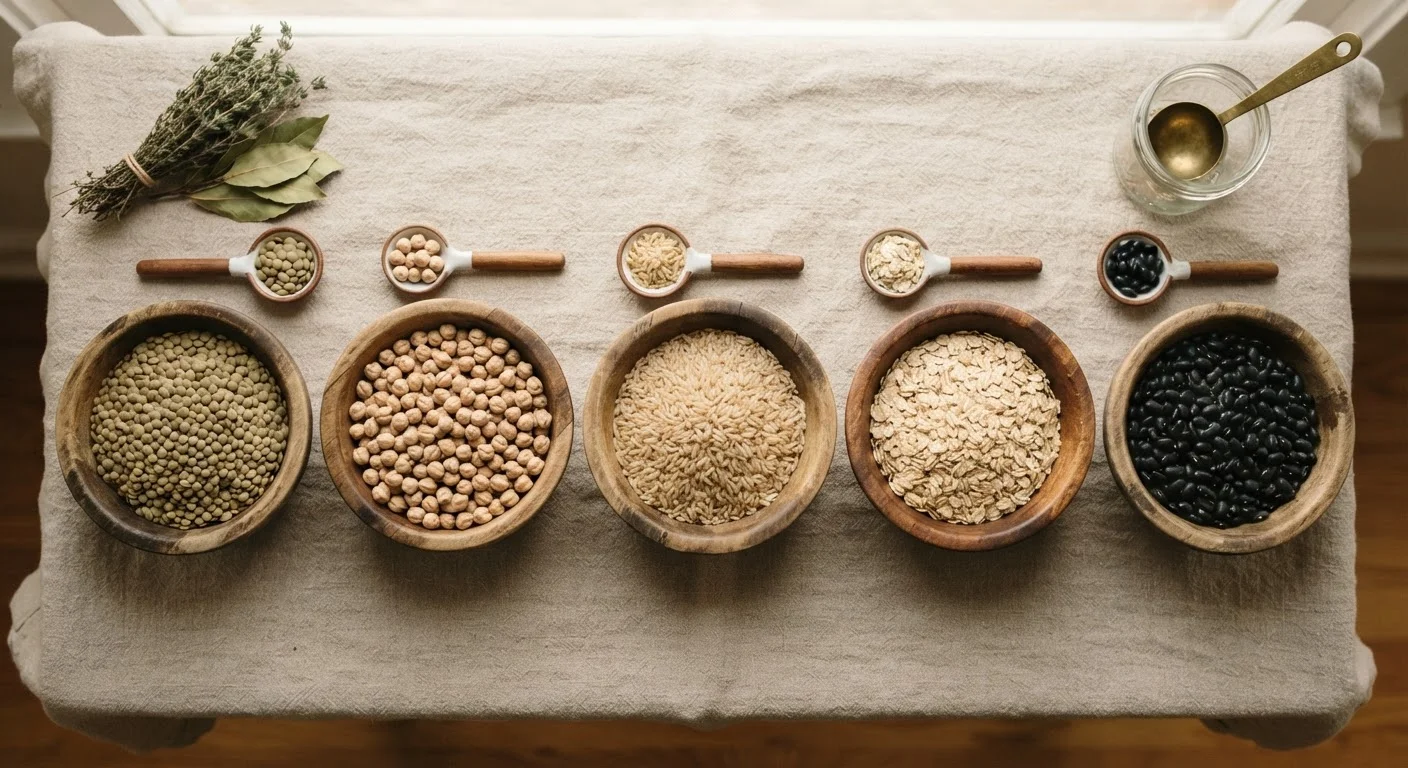
Photo credit: InsightsGrove.com | Discover Joy In Reading
In this article
Lentils, chickpeas, oats, and rice are some of the most nutrient-dense foods available at low cost. Here's why they deserve a central role in your diet.
Key Takeaways
- Pulses and legumes are among the most affordable complete or near-complete protein sources available.
- Whole grains provide complex carbohydrates, B vitamins, and dietary fiber that refined grains largely lack.
- Regular consumption of legumes is associated with improved cardiovascular and metabolic health markers.
- Dried pulses typically cost significantly less per serving than canned alternatives and animal proteins.
- Combining grains and legumes in meals can yield a full amino acid profile without meat.
Why These Foods Belong at the Center of a Budget Diet
When nutritional value per dollar is the measure, few food categories outperform pulses, grains, and legumes. A pound of dried lentils routinely yields multiple servings at a fraction of the cost of an equivalent amount of animal protein, while delivering meaningful quantities of protein, fiber, iron, and B vitamins. For budget-conscious young adults, that ratio is difficult to ignore.
This isn't just a frugality argument. Diets centered on legumes and whole grains are associated - in large, well-conducted epidemiological studies - with lower rates of cardiovascular disease, type 2 diabetes, and certain digestive conditions. The affordability and the health profile reinforce each other, which is why these foods appear consistently in evidence-informed dietary guidance worldwide.
For a broader look at how to structure an affordable, nutritionally sound diet, see our guide on eating well on a tight budget.
~9g
Protein per half-cup cooked lentils
Per USDA FoodData Central nutritional data for cooked lentils, a standard half-cup serving.
~8g
Dietary fiber per half-cup cooked lentils
According to USDA FoodData Central; this represents roughly 28% of a general daily fiber reference value.
3-5x
More servings per dollar vs. most animal proteins
A general cost-per-serving comparison based on typical US retail prices for dried legumes versus common cuts of meat.
The Nutritional Profile of Pulses and Legumes
Lentils, chickpeas, black beans, kidney beans, and split peas share a remarkably consistent nutritional pattern: high in plant protein, rich in soluble and insoluble fiber, low in fat, and loaded with micronutrients including folate, iron, magnesium, and potassium. A half-cup serving of cooked lentils provides roughly 9 grams of protein and 8 grams of fiber - meaningful contributions toward daily targets.
One common question is whether plant proteins are "complete." Most legumes are low in the amino acid methionine, while grains tend to be low in lysine. This is why the pairing of beans and rice, or hummus with pita, appears across so many food cultures - the two foods complement each other's amino acid gaps. You don't need to engineer this at every meal, but eating both legumes and grains regularly covers your bases naturally.
Legumes are also notable for their low glycemic index, meaning they cause a slower, more gradual rise in blood sugar compared to refined carbohydrates. This is relevant for sustained energy and metabolic health, though individual responses vary. For a direct comparison of protein sources, see protein on a budget: eggs, legumes, and the meat aisle compared.
Reducing Gas From Legumes
Digestive discomfort from beans is a common concern and often a reason people avoid them. Soaking dried beans overnight and discarding the soaking water before cooking reduces the oligosaccharide content responsible for gas. Starting with smaller servings and increasing intake gradually also helps your digestive system adapt over time.
What Whole Grains Actually Offer
Oats, brown rice, barley, farro, and whole wheat products retain their outer bran layer and inner germ, which is where most of the nutritional value lives. The bran provides fiber and antioxidants. The germ contains B vitamins, vitamin E, and healthy fats. When grains are refined - as with white rice or white flour - these layers are stripped away, leaving primarily starch.
This distinction matters practically. Oats, for example, contain beta-glucan, a type of soluble fiber that has strong evidence behind its role in reducing LDL cholesterol levels. Barley has a similar profile. Brown rice provides more magnesium and fiber than white rice, though both are widely consumed globally in nutritionally adequate diets, particularly when paired with nutrient-dense accompaniments.
Whole grains also contribute to satiety - the feeling of fullness - which can help with managing overall food intake. Their complex carbohydrates provide sustained energy rather than rapid spikes. To understand how different carbohydrate sources compare, our article on carbohydrates on a budget offers a useful breakdown.
Putting It Into Practice
The practical gap between knowing these foods are nutritious and actually cooking them regularly is real. Dried beans require soaking and longer cooking times, which can feel like a barrier. A few approaches make this manageable: batch-cooking a large pot of lentils or chickpeas on the weekend, using a slow cooker for hands-off preparation, or keeping canned beans as a convenient fallback when time is short.
Building a pantry around these staples creates a reliable nutritional foundation. A well-stocked shelf of dried lentils, oats, brown rice, canned chickpeas, and whole wheat pasta gives you the raw material for dozens of varied, balanced meals. Our guide to building a budget-friendly pantry offers a practical checklist for doing exactly this.
This article is for general informational and educational purposes only and is not a substitute for professional medical or dietary advice. Consult a qualified healthcare professional or registered dietitian for guidance specific to your health needs.
Frequently Asked Questions

Author
Health & Wellness Editorial Team
Health & Wellness Editorial Team is the collective byline for our editorial team and contributor network. Articles published under this byline or an editorial pen name are researched, written, and reviewed according to our editorial standards for clarity, consistency, and independence before publication.
View all articles →