
Reading the Paperwork: Key Documents in a Used Car Transaction Explained
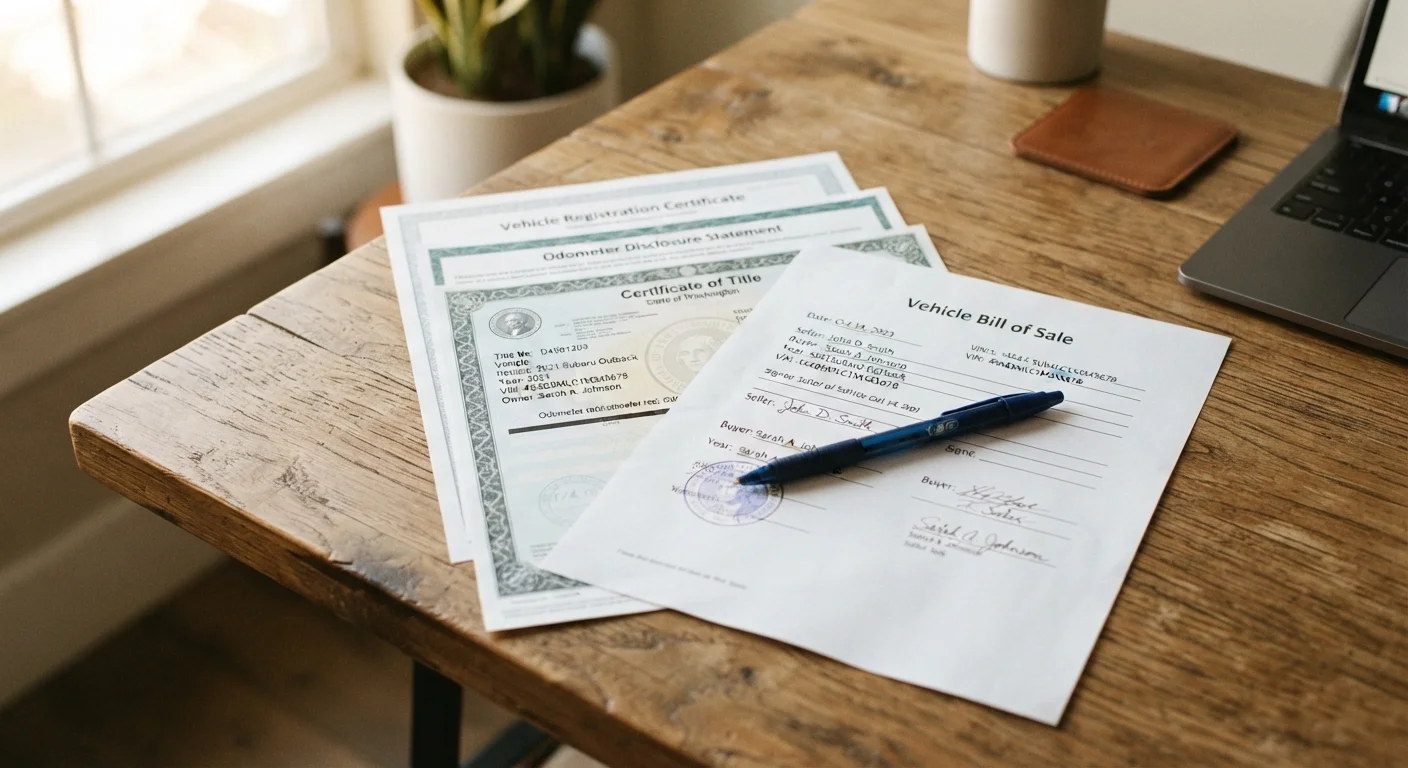
Photo credit: InsightsGrove.com | Discover Joy In Reading
In this article
A plain-language reference to the title, bill of sale, odometer disclosure, and other documents you'll encounter when buying a used vehicle.
Why Paperwork Is the Last Line of Defense
Shaking hands on a price is just the beginning. The documents you sign in a used car transaction determine whether you legally own the vehicle, what you paid, and whether the seller had the right to sell it in the first place. First-time buyers often gloss over paperwork in the excitement of closing a deal - and that's exactly where costly problems hide.
This reference covers each major document you're likely to encounter, what it must contain, and what to watch for. For a broader walkthrough of the full buying process, see the First-Time Buyer's Complete Roadmap.
| Documents typically required in a private sale | Title, bill of sale, odometer disclosure |
| Federal odometer disclosure law | Truth in Mileage Act (49 U.S.C. § 32705) (Applies to most vehicles under 10 model years old) |
| FTC Buyers Guide requirement | Mandatory for all used vehicles sold by licensed dealers (Federal Trade Commission Used Car Rule) |
| VIN check points | Dashboard, door jamb, title, bill of sale - all must match |
| Lien clearance responsibility | Seller's obligation before title can transfer |
The Core Documents Explained
Certificate of Title
The title is the most critical document in any used car sale. It proves legal ownership and must be transferred to your name after purchase. Check that the seller's name on the title matches their government-issued ID exactly. Look for the title type - a clean title means no major damage history has been reported to the state, while a salvage or rebuilt title signals prior severe damage. Liens listed on the title mean a lender has a financial claim on the vehicle; the lien must be satisfied before ownership can transfer cleanly to you.
Bill of Sale
The bill of sale is a written record of the transaction. Even when a state doesn't legally require one for private sales, you should always insist on it. A complete bill of sale includes the vehicle identification number (VIN), make, model, year, odometer reading at sale, agreed purchase price, date of sale, and both parties' names and signatures. It protects you if the vehicle is later associated with a dispute or unpaid debt.
Odometer Disclosure Statement
Federal law - specifically the Truth in Mileage Act - requires sellers to disclose the odometer reading in writing for most vehicles under ten model years old. This document confirms the stated mileage and flags whether the seller believes the odometer is inaccurate or has been tampered with. Cross-reference this figure against any vehicle history report you obtain - major mileage discrepancies are a serious red flag.
As-Is Disclosure (Dealer Sales)
When buying from a dealer, you'll often see a Federal Trade Commission (FTC) Buyers Guide - a window sticker that must disclose whether the vehicle is sold as-is (no warranty coverage) or with a dealer warranty. "As-is" means you accept the vehicle in its current condition with no obligation on the dealer to fix anything after the sale. Read this carefully before signing anything else.
Release of Liability
After a private sale, most states require or strongly recommend the seller file a release of liability with the DMV. This document protects the former owner if the vehicle is involved in a traffic violation or accident before you register it. As a buyer, confirm the seller completes this step - it also signals a clean handover.
Certificate of Title
The official state-issued document that establishes legal ownership of a vehicle. It must be signed over to the buyer at the point of sale and then registered with the state DMV.
Lien
A legal claim held by a lender against a vehicle used as loan collateral. A lien must be paid off and formally released before a clean title can transfer to a new owner.
Salvage Title
A title designation assigned by the state when an insurer has declared a vehicle a total loss. Salvage-titled vehicles often face restrictions on registration and insurance coverage.
Rebuilt Title
A title given to a previously salvaged vehicle that has been repaired and passed a state inspection. It signals prior severe damage even after repair.
Odometer Disclosure Statement
A federally required written statement from the seller confirming the vehicle's mileage at the time of sale and attesting that the odometer has not been altered.
Bill of Sale
A written record documenting the terms of a vehicle sale, including price, VIN, odometer reading, and the identities of both buyer and seller. It serves as legal proof of the transaction.
As-Is Sale
A sale in which the buyer accepts the vehicle in its current condition with no warranty or repair obligation from the seller after the transaction is complete.
Release of Liability
A document filed with the state DMV by the seller after a sale, formally removing their legal responsibility for the vehicle from the sale date onward.
Before You Sign: A Practical Checklist
Documents are only useful if you actually read them. Here are the most important verification steps:
- Match the VIN across the title, bill of sale, dashboard plate, and door jamb sticker. Any mismatch warrants an immediate pause.
- Verify the seller's identity. The name on the title must match the person in front of you and their ID.
- Confirm no active lien. Call the lienholder or verify through your state DMV before handing over money.
- Check the title type. A salvage or rebuilt title significantly affects insurability and resale value - understand what you're accepting.
- Record the odometer reading yourself at the time of purchase and ensure it matches the disclosure statement.
- Keep copies of everything. Scan or photograph every signed document before leaving.
Pairing solid paperwork review with a pre-purchase inspection gives you the most complete picture of what you're buying. For unfamiliar terms on any of these forms, the used car terminology glossary can help decode the language quickly.
Private Sellers vs. Dealers: Different Rules Apply
Licensed dealers are subject to FTC regulations and must provide a Buyers Guide disclosing warranty status. Private sellers are not held to the same standard, which is why a thorough bill of sale and title review matters even more in a private transaction. Some states have additional consumer protections for dealer purchases - check your state DMV's website for specifics before you buy.

Author
Car Ownership Editorial Team
Car Ownership Editorial Team is the collective byline for our editorial team and contributor network. Articles published under this byline or an editorial pen name are researched, written, and reviewed according to our editorial standards for clarity, consistency, and independence before publication.
View all articles →