
Negotiating a Used Car Price Without Feeling Out of Your Depth
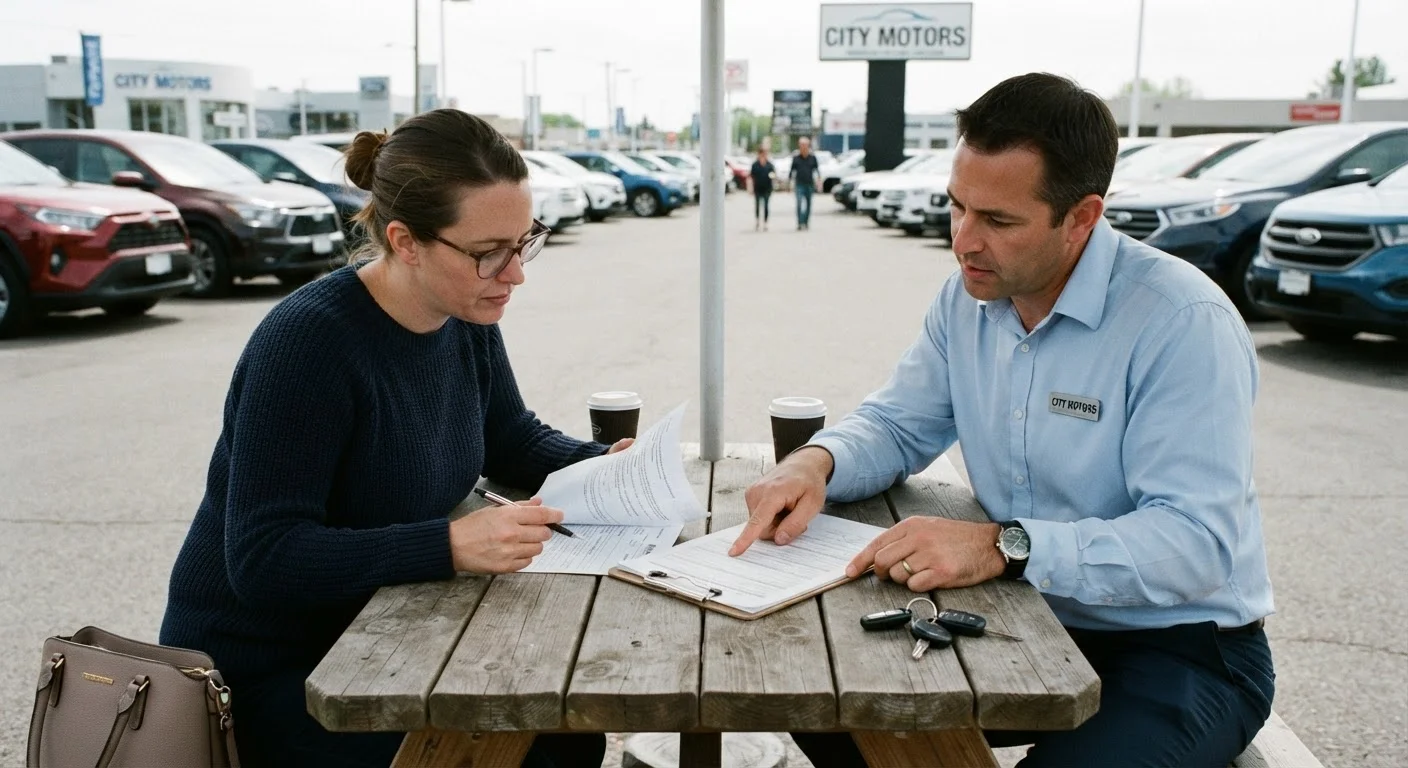
Photo credit: InsightsGrove.com | Discover Joy In Reading
In this article
Learn the research, timing, and conversational tactics that give buyers a stronger footing when discussing price with a private seller or dealer.
Key Takeaways
- Research the vehicle's market value before any conversation begins - knowledge is your strongest lever.
- Identifying verifiable flaws gives you grounded, unemotional reasons to request a lower price.
- Walking away is a legitimate negotiating move, not a failure.
- Private sellers and dealers require different tactics; knowing the difference matters.
- Never negotiate from a monthly payment figure - always anchor on the total purchase price.
Why preparation is the real negotiation
Most first-time buyers feel outmatched during price discussions - not because sellers are inherently deceptive, but because experienced sellers have had the conversation dozens of times while buyers are having it once. The fastest way to close that gap is preparation. When you arrive with documented market data, a history report, and an independent inspection, you're no longer guessing - you're reasoning. That changes the dynamic entirely.
Before you focus on tactics, make sure you're familiar with common used car terms. If phrases like clean title, salvage history, or odometer disclosure aren't clear, review the used car terminology guide first - understanding what you're looking at matters as much as how you negotiate it.
For context on the full buying process, the first-time buyer's complete roadmap covers every stage from budget-setting to signing paperwork.
What you will need
What you'll need before you start
Market Value Reference Tool (e.g., Kelley Blue Book, Edmunds)
Establishes the realistic price range for a specific make, model, year, mileage, and condition so you can anchor your offer to verifiable data.
Vehicle History Report
Reveals accidents, title issues, odometer discrepancies, and service gaps that can justify a lower offer.
Pre-approval Letter from a Bank or Credit Union
Removes dependence on dealer financing and keeps negotiation focused on the vehicle's purchase price.
Independent Pre-Purchase Inspection
A licensed mechanic's written assessment of the vehicle's condition gives you documented, credible grounds to negotiate on any faults found.
How to negotiate: step by step
Establish the vehicle's realistic market value
Before contacting any seller, look up the car's value on at least two independent pricing tools. Use the same trim level, mileage range, and condition rating the listing claims. Note the private-party value and the dealer retail value separately - they differ, and the gap is relevant context for what you can reasonably request.
Print or screenshot the range so you can reference it calmly during the conversation.
Pull the vehicle history report and note every flag
A history report can reveal prior accidents, flood or salvage designations, odometer rollbacks, title problems, and service record gaps. Each documented issue is a data point - not an attack on the seller - that gives you a factual basis to request a reduction.
Write down any flags you find. You'll refer to them specifically, not vaguely, during negotiation.
Arrange a pre-purchase inspection before making an offer
Ask a licensed mechanic - one you choose, not one recommended by the seller - to inspect the vehicle. Expect to pay a modest fee for this service. The written assessment gives you an objective condition report that carries weight in negotiation. Any mechanical issues the mechanic identifies can be quantified by repair estimates, which translate directly into price reduction requests.
Set your opening offer and your walk-away number in advance
Decide two numbers before you speak: the price you'll open with, and the maximum you'll pay. Your opening offer should be below your maximum but grounded in your research - not an insulting lowball that shuts the conversation down. A common approach is to open 10-15% below asking price when the market data supports it, then explain your reasoning with the evidence you've gathered.
Your walk-away number is private. Never reveal it.
Make your offer calmly and cite your evidence
State your offer once, clearly, and immediately explain what it's based on: the market value range you found, the vehicle history flags, and any inspection findings. This frames your offer as reasoned rather than arbitrary. Then stop talking. Silence is a legitimate tool - the instinct to fill quiet with concessions works against you.
If negotiating with a dealer, be aware that the salesperson may need to consult a manager. This is normal and not a reason to increase your offer unprompted.
Evaluate counteroffers against your research, not your emotions
When a seller counters, don't respond immediately. Refer back to your notes. If the counter is still outside the range your research supports, say so plainly and explain why. You can make incremental moves - but keep them small, and only move if the seller provides a genuine reason (not simply pressure or urgency).
Watch for add-ons in dealer settings: extended warranties, paint protection, and documentation fees can inflate the final price significantly. Each one is negotiable or declinable.
Be prepared to walk away - and follow through if needed
Walking away is not a failure. It is the clearest signal that you are a serious, informed buyer with alternatives. If a seller won't move to a price your research supports, thank them, leave your contact information, and go. Sellers frequently reconsider within a day or two, particularly if the listing has been sitting. Meanwhile, your attention shifts to the next option on your shortlist.
Avoid negotiating from monthly payments
Focusing on what fits your monthly budget rather than the total purchase price gives a dealer significant room to adjust loan terms in ways that cost you more overall. Always agree on the out-the-door total price first, then discuss financing separately. If you have a pre-approval from your own bank or credit union, you're in a stronger position to evaluate any financing the dealer offers.
Dealer vs. private seller: key differences
The fundamentals of negotiation - research, evidence, composure - apply in both settings, but the dynamics differ in a few important ways.
- Private sellers typically have a single transaction in mind and may be more emotionally attached to their vehicle or its price. They also have no overhead, so their pricing may have more built-in flexibility, or less. There's rarely a management structure to navigate, making the conversation more direct.
- Dealers are experienced negotiators operating within a business model. Their listed prices often include margin for negotiation. Watch for add-on products and fees introduced late in the process - documentation fees, dealer-installed accessories, and aftermarket warranties can add hundreds or thousands to the final number. Question every line item on the finance and insurance paperwork.
Let your research do the talking
Sellers respond better to documented reasoning than to assertive pressure. Phrases like "the Kelley Blue Book private-party range for this trim and mileage is X to Y" or "the inspection found the front brake pads need replacement, which typically runs $150-$250" are harder to dismiss than a bare opinion. Keep your tone neutral and your evidence specific.
For a broader look at principles that protect buyers regardless of seller type, see the guide on approaching a used car purchase the right way. And if you want to understand the psychology behind pricing and how savvy shoppers think, The Full Picture on Smart Deal Finding is worth your time.
This article provides general educational information about negotiating used car purchases. It is not personalised financial or legal advice. Consult a qualified professional for guidance specific to your situation.

Author
Car Ownership Editorial Team
Car Ownership Editorial Team is the collective byline for our editorial team and contributor network. Articles published under this byline or an editorial pen name are researched, written, and reviewed according to our editorial standards for clarity, consistency, and independence before publication.
View all articles →