
Dynamic Currency Conversion: The Airport Trap That Quietly Drains Your Travel Budget
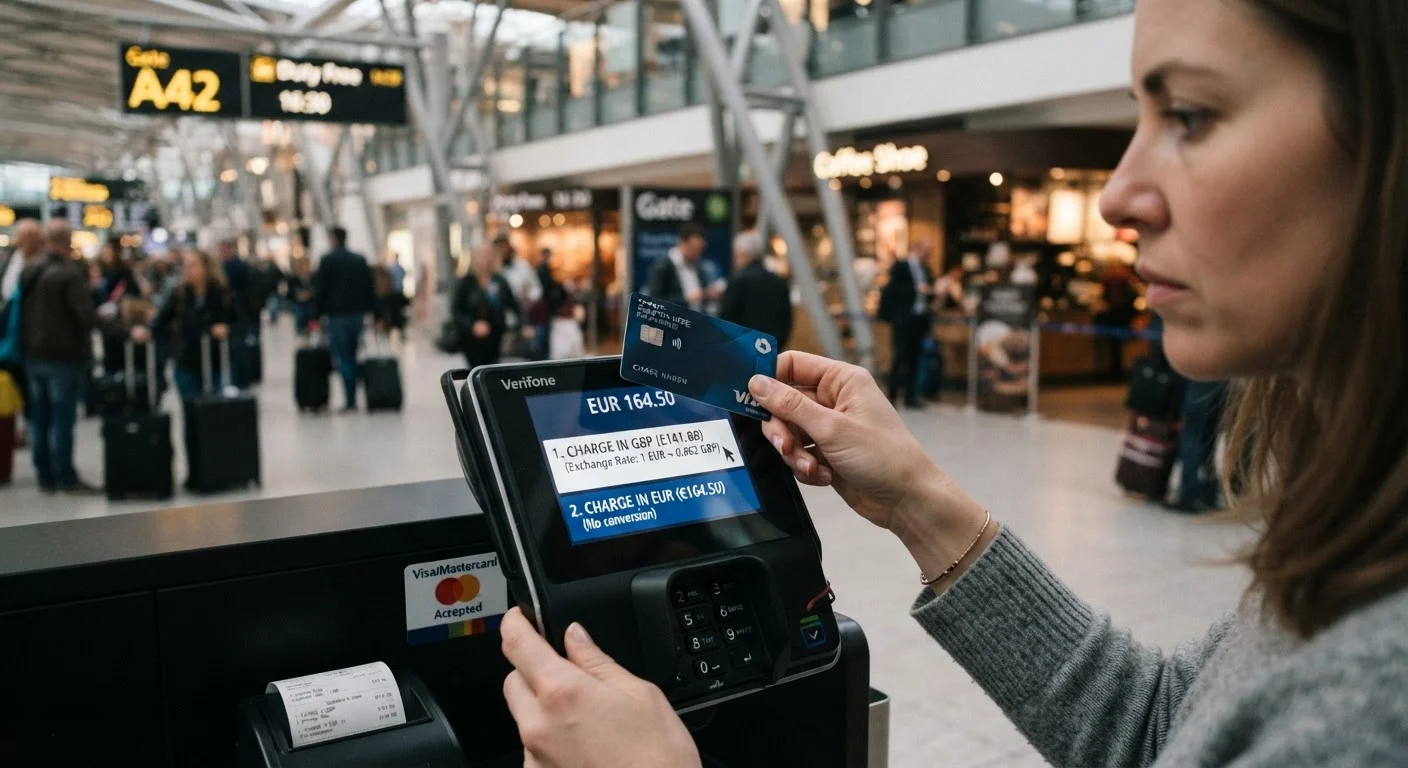
Photo credit: InsightsGrove.com | Discover Joy In Reading
In this article
Dynamic currency conversion sounds convenient, but it often costs more. Learn how it works and when to decline it abroad.
Key Takeaways
- Dynamic currency conversion lets merchants convert your purchase to your home currency — usually at a poor exchange rate.
- You almost always pay more with DCC than letting your own bank handle the conversion.
- The option appears at ATMs, hotel checkout desks, restaurants, and shops — not just airports.
- You have the right to decline DCC every time it's offered; choose the local currency instead.
- Cards with no foreign transaction fees reduce your exposure, but don't eliminate the DCC risk.
- Verify your receipt before signing — some terminals default to DCC without clearly asking.
How Dynamic Currency Conversion Actually Works
When you use a foreign card at an international terminal, the payment system detects that your card was issued in a different country. At that moment, a third-party DCC provider — not your bank — steps in and offers to convert the transaction amount into your home currency immediately.
The pitch sounds reasonable: "Would you like to pay in US dollars so you know exactly what you're being charged?" The problem is that the rate used for that conversion belongs to the DCC provider, not to Visa or Mastercard's daily network rate, and certainly not to your bank's rate. The provider builds its profit into that rate, often adding a significant margin on top.
Your bank may still add its own foreign transaction fee on top of this — meaning DCC can trigger a double layer of cost. Understanding this mechanics gap is the foundation for avoiding it. For a broader look at how fees accumulate when paying abroad, see our guide to what card fees actually look like overseas.
3–12%
Typical DCC markup above mid-market rate
Industry and consumer finance research consistently places DCC exchange rate margins in this range, varying by provider and region.
$100–$160
Estimated DCC cost on a $2,000 trip
Based on a mid-range 5–8% DCC markup applied to total card spending; actual costs depend on providers encountered and transaction mix.
~40%
Share of international card transactions offered DCC
Research by payment industry analysts suggests DCC is offered on a significant portion of international card-present transactions at tourist-heavy locations.
Where You'll Encounter It (It's Not Just Airports)
The term 'airport trap' is apt because international terminals are high-pressure environments where travelers are rushed and distracted — prime conditions for clicking 'accept' without reading the screen. But DCC is everywhere abroad:
- ATMs: Often the most aggressive DCC prompt, framed as a 'guaranteed rate' or 'no hidden fees' offer.
- Hotels: Checkout is a common DCC moment, especially at tourist-heavy properties that process many international cards daily.
- Restaurants and shops: Handheld card readers passed to your table or counter frequently default to DCC.
- Online bookings in foreign currency: Some hotel and tour websites offer to show prices and charge in your home currency — same principle, same markup.
DCC is one of several spending patterns that quietly erode travel budgets. Our piece on where budget travelers tend to overspend covers more of these overlooked drains.
Quick Check Before You Tap or Sign
Before confirming any international payment, glance at the currency symbol on the screen. If it shows your home currency (e.g., USD) rather than the local one, DCC has been activated. Press back or ask the cashier to cancel and reprocess — this takes under a minute and can save you a meaningful percentage of the transaction.
How to Decline It Every Single Time
The single most effective tactic: always choose local currency when given the option at a terminal or ATM. The phrasing varies — 'pay in EUR,' 'continue without conversion,' 'decline' — but the principle is consistent.
A few practical steps worth building into your travel routine:
- Read every payment screen before confirming. DCC prompts are sometimes buried in the flow, not displayed as a clear yes/no question.
- Check printed receipts before signing. If the amount shown is in your home currency and you didn't consent, ask to void and reprocess in local currency.
- Tell cashiers upfront. At sit-down restaurants or hotels, you can say 'I'd like to pay in local currency' before the card is even run.
- Use cards with strong international policies. Cards that waive foreign transaction fees and use network exchange rates limit (but don't eliminate) your exposure. See how to manage money across multiple currencies on a long trip for card strategy on extended travel.
This article provides general financial education and is not personalized financial advice. Consult a qualified financial professional for guidance specific to your situation.
Frequently Asked Questions

Author
Travel Smarter Editorial Team
Travel Smarter Editorial Team is the collective byline for our editorial team and contributor network. Articles published under this byline or an editorial pen name are researched, written, and reviewed according to our editorial standards for clarity, consistency, and independence before publication.
View all articles →