
Buying in Bulk: When It Genuinely Pays Off and When It Doesn't
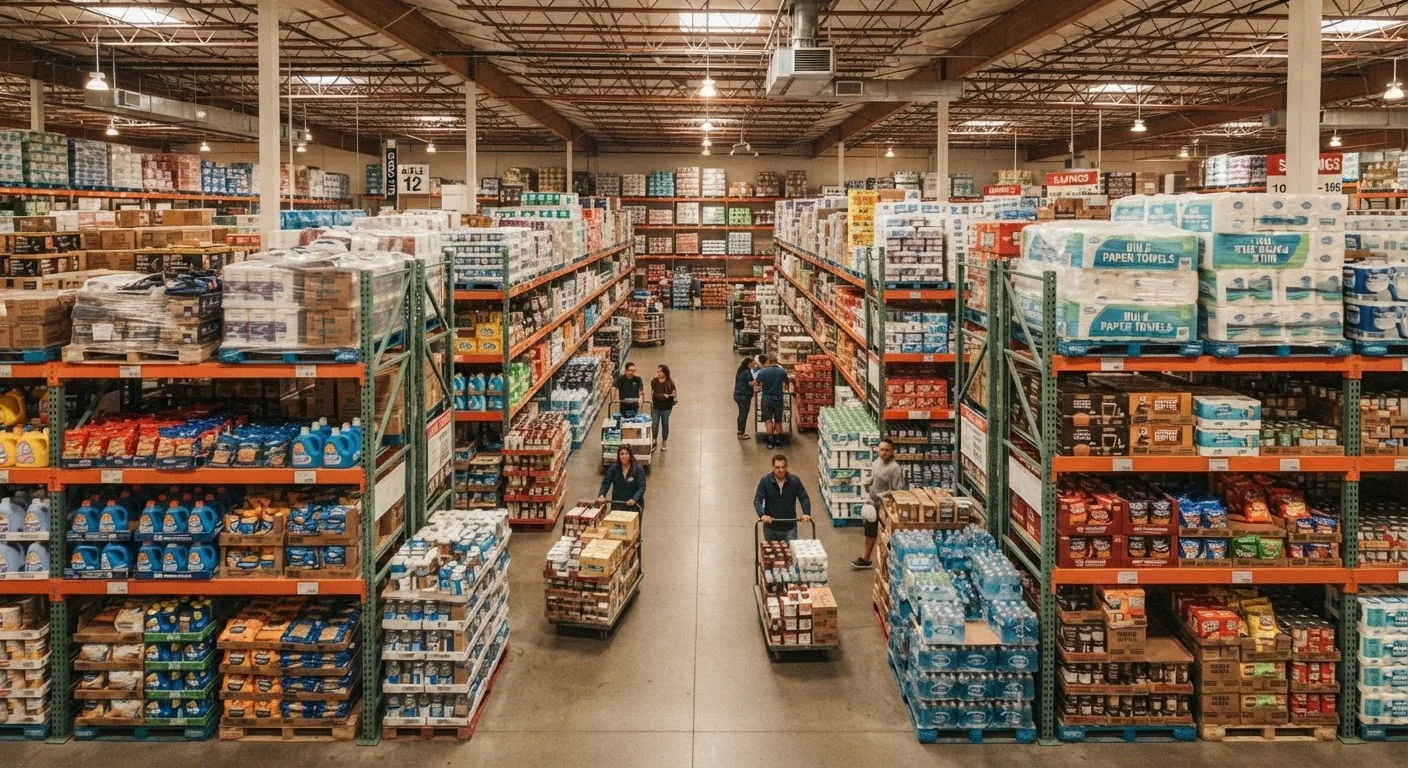
Photo credit: InsightsGrove.com | Discover Joy In Reading
In this article
Bulk buying can cut costs — or quietly waste money. A balanced look at when bulk purchases make sense and when to skip the large pack.
Key Takeaways
- Unit price is the only reliable metric — ignore the headline savings percentage.
- Non-perishables and items with long shelf lives are almost always better candidates for bulk buying.
- Storage costs, spoilage risk, and upfront cash outlay can erase the apparent discount entirely.
- Buying in bulk makes the most sense when your household genuinely uses the product at scale.
- Perishables, trend-driven items, and products you haven't tested before are generally poor bulk candidates.
Lower cost per unit on stable household staples
For items like laundry detergent, canned goods, and paper products, the per-unit price drop at bulk quantities is typically 20–40% compared to standard retail sizes — a real, compounding saving for high-use households.
Fewer shopping trips over time
Stocking up reduces the frequency of restocking runs, which saves time and also reduces impulse purchases that tend to inflate grocery and household bills.
Price insulation against short-term inflation
Buying a six-month supply of a staple when prices are stable can buffer against price increases later — though this only applies to non-perishables with confirmed long shelf lives.
Predictable unit costs for budgeting purposes
When you know exactly what you pay per load of laundry or per meal component, monthly household budgets become easier to plan around.
Spoilage erases savings on perishables
Perishable goods bought in bulk frequently expire before smaller households consume them, turning a per-unit discount into a net loss once wasted product is factored in.
Large upfront cash outlay strains tight budgets
Paying $60–$100 in a single transaction may be rational long-term but creates short-term cash flow pressure for households operating week to week.
Storage requirements are often underestimated
Bulk quantities require meaningful shelf, pantry, or freezer space. In smaller apartments, this either isn't available or imposes real lifestyle trade-offs.
Taste fatigue leads to abandoned inventory
Purchasing 30+ servings of a product you haven't thoroughly tested — or that household members tire of — regularly results in wasted product and wasted money.
Membership fees reduce net savings
Warehouse club memberships typically cost $50–$65 annually. For shoppers who don't buy in bulk frequently enough, the membership cost exceeds the savings generated.
Locks you into a product before better options emerge
Committing to a large quantity of a product can leave you stuck with it if a better formulation, price, or alternative appears — a particular risk with cleaning and personal care products.
What Bulk Buying Actually Promises
The pitch behind bulk buying is straightforward: pay more upfront, pay less per unit. Warehouse clubs and large-format retailers build their entire model around this premise. And on paper, it holds — buying 96 ounces of dish soap instead of 24 ounces typically drops the cost per ounce by 20–40%.
The problem is that "per unit" savings only translate to actual savings if you use every unit before it expires, degrades, or becomes something you no longer want. That qualification eliminates a much larger share of bulk purchases than most shoppers expect.
As with many shopping strategies, the math looks different once you factor in the full picture. Our piece on how shoppers misjudge a discount's true value covers related miscalculations worth reviewing before committing to any large purchase.
Lower cost per unit on stable household staples
For items like laundry detergent, canned goods, and paper products, the per-unit price drop at bulk quantities is typically 20–40% compared to standard retail sizes — a real, compounding saving for high-use households.
Fewer shopping trips over time
Stocking up reduces the frequency of restocking runs, which saves time and also reduces impulse purchases that tend to inflate grocery and household bills.
Price insulation against short-term inflation
Buying a six-month supply of a staple when prices are stable can buffer against price increases later — though this only applies to non-perishables with confirmed long shelf lives.
Predictable unit costs for budgeting purposes
When you know exactly what you pay per load of laundry or per meal component, monthly household budgets become easier to plan around.
When the Savings Are Real
Bulk buying performs best across a predictable set of conditions. The item should be non-perishable or have a long shelf life, your household should already consume it regularly, and you should have storage space that doesn't cost you anything extra to use.
Strong candidates include: paper goods (toilet paper, paper towels), laundry detergent, canned goods, dried beans and grains, cleaning supplies, and pet food if your pet eats the same formula consistently. For the last category, a balanced pet feeding routine on a budget explores how bulk purchasing fits into a practical feeding strategy.
Batch cooking households also benefit from bulk grain, legume, and pantry staple purchases — batch cooking methods pair well with stocked pantries and reduce both per-meal cost and weekly prep time.
30–40%
Typical unit-price reduction for bulk non-perishables
Consumer research consistently finds unit price reductions in this range for stable goods like paper products and cleaning supplies when bought at large-format quantities.
~40%
Share of food wasted at the consumer level in the US
The USDA estimates that roughly 30–40% of the US food supply is wasted, with households as a primary contributor — a key risk factor when bulk-buying perishables.
When Bulk Buying Quietly Costs You More
The failure modes of bulk buying are consistent and well-documented. Spoilage is the most common: produce, dairy, bread, and even some pantry items go bad before a one- or two-person household works through them. A 5-pound bag of spinach at half the per-ounce price of a smaller bag is no bargain if half of it ends up composted.
Taste fatigue is underrated as a cost. Buying 48 servings of a product you've never tried before — or one you enjoy in moderation — often leads to abandonment. That leftover inventory ties up money and space.
Storage is a real cost even when it feels invisible. Renting a larger apartment, adding shelving, or running an extra freezer all carry dollar values. If bulk buying is driving those decisions, the savings calculation changes considerably.
Upfront cash outlay also matters. Spending $80 on a bulk purchase that saves $25 over several months may be logical in the abstract, but it strains budgets that operate on thin weekly margins. This is a pattern worth examining alongside common shopping myths that lead consumers to prioritize apparent savings over actual cash flow.
Spoilage erases savings on perishables
Perishable goods bought in bulk frequently expire before smaller households consume them, turning a per-unit discount into a net loss once wasted product is factored in.
Large upfront cash outlay strains tight budgets
Paying $60–$100 in a single transaction may be rational long-term but creates short-term cash flow pressure for households operating week to week.
Storage requirements are often underestimated
Bulk quantities require meaningful shelf, pantry, or freezer space. In smaller apartments, this either isn't available or imposes real lifestyle trade-offs.
Taste fatigue leads to abandoned inventory
Purchasing 30+ servings of a product you haven't thoroughly tested — or that household members tire of — regularly results in wasted product and wasted money.
Membership fees reduce net savings
Warehouse club memberships typically cost $50–$65 annually. For shoppers who don't buy in bulk frequently enough, the membership cost exceeds the savings generated.
Locks you into a product before better options emerge
Committing to a large quantity of a product can leave you stuck with it if a better formulation, price, or alternative appears — a particular risk with cleaning and personal care products.
How to Evaluate Any Bulk Purchase Before You Commit
Three questions narrow the decision quickly:
- What is the unit price, and how does it compare? Calculate cost per ounce, sheet, load, or serving — not total price. Many stores display this on shelf tags, but verify it independently since unit-price labels are occasionally misleading.
- Will you realistically use it before it expires or degrades? Check the expiration date against your actual consumption rate, not your optimistic one.
- Does the upfront cost fit your current cash flow? A deal that tightens your budget this week isn't neutral — it has a real cost even if the math eventually works out.
For shoppers weighing where to buy in bulk — in-store warehouse clubs versus online large-format orders — an online vs. in-store comparison breaks down the practical trade-offs by product type and situation.
One Rule Worth Memorizing
Never buy a product in bulk before you've used at least one standard-size version of it. This applies especially to food, cleaning products, and personal care items where formulation, scent, or effectiveness can only be judged through use. A small initial purchase is cheap insurance against committing to a quantity you won't finish.
Bulk buying is one input into a broader cost-reduction strategy. For recurring household expenses, the cutting fixed costs hub covers complementary approaches that work alongside smart purchasing habits.

Author
Smart Spending Editorial Team
Smart Spending Editorial Team is the collective byline for our editorial team and contributor network. Articles published under this byline or an editorial pen name are researched, written, and reviewed according to our editorial standards for clarity, consistency, and independence before publication.
View all articles →