
The Real Costs Hidden Inside Your Monthly Spending
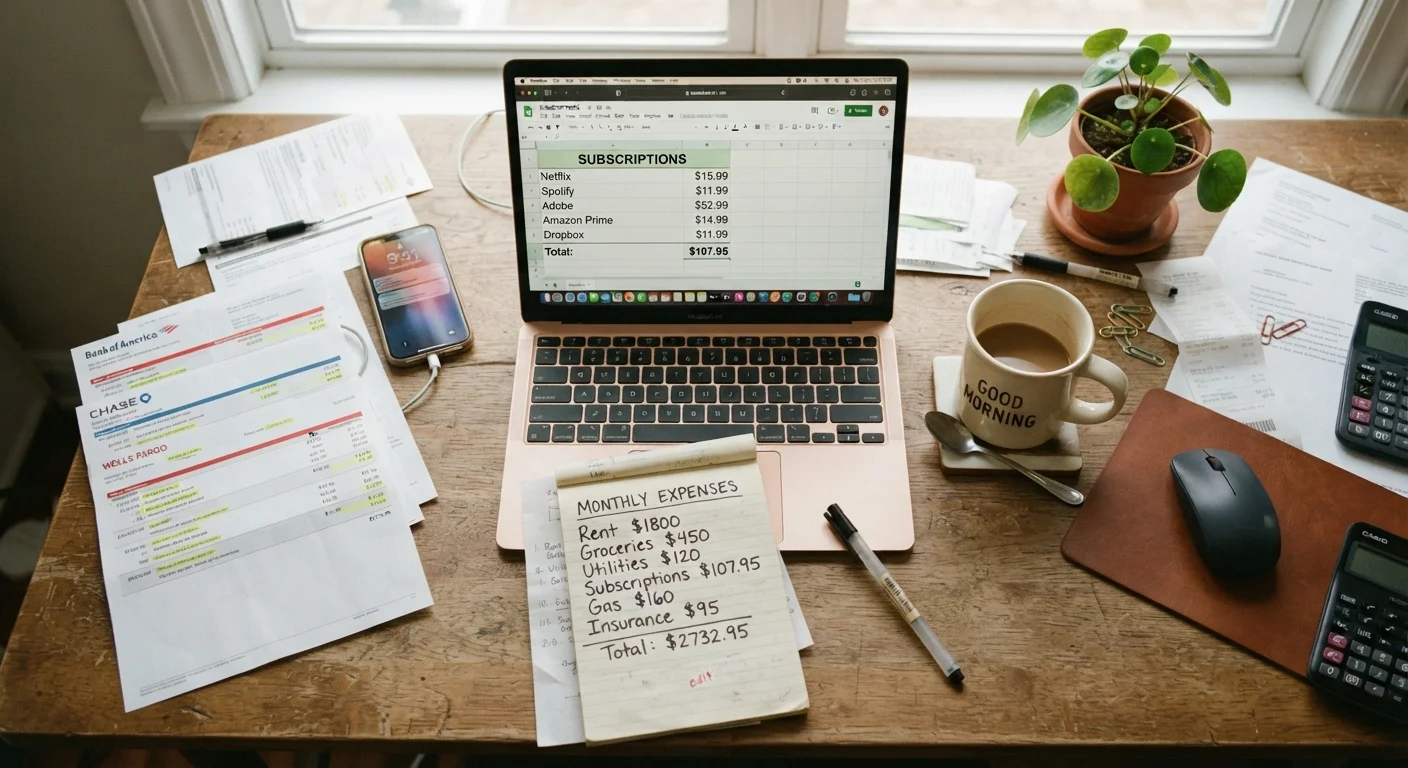
Photo credit: InsightsGrove.com | Discover Joy In Reading
In this article
Subscriptions, fees, and automatic renewals quietly drain bank accounts. Here's what to audit and how to spot the spending you've stopped noticing.
Key Takeaways
- Automatic renewals and free-trial conversions are among the most common sources of unnoticed monthly spending.
- Reviewing three months of bank and card statements — not just one — reveals patterns a single month hides.
- Many recurring fees are negotiable or have lower-cost alternatives worth switching to.
- Utility usage charges can creep up without a rate change — actual consumption habits matter too.
- A structured audit done once every quarter takes less than an hour and often uncovers meaningful savings.
Why Your Budget Feels Off Even When You're Careful
You track your groceries. You skip the expensive coffee runs. You're doing what you're supposed to do — and yet the math never quite adds up at the end of the month. The most likely culprit isn't one big splurge. It's a collection of small, automated charges you agreed to at some point and then mentally filed under "handled."
Subscriptions auto-renew. Free trials convert. Insurance premiums creep upward at renewal. A streaming service raises its price by $2 and you don't notice because it still feels cheap per line item — until you add up five of them. These charges share a common trait: they don't require your active participation to keep happening.
This checklist is designed to surface every category of spending that typically hides in plain sight. Work through it with your last three months of bank and credit card statements open. One month isn't enough — some charges are quarterly or annual and will look like a one-off if you only look back 30 days.
For deeper context on the patterns that make hidden costs so persistent, see shopping habits that quietly drain your budget — because the behavior often matters as much as the charges themselves.
Subscription Audit
Banking and Financial Fees
Utilities and Home Services
Insurance and Coverage
Phone and Communication
What to Do After You Find the Leaks
Finding a charge you don't recognize or no longer want is step one. What happens next determines whether you actually save money or just feel briefly motivated and move on.
For subscriptions, cancel before you research replacements. The replacement research often becomes an excuse to delay cancellation indefinitely. Cut first, evaluate later. Most services let you rejoin at any time, and your data or preferences are typically retained for 30–90 days.
Don't Let Research Delay Action
A common pattern: you find a charge you want to cancel, start researching alternatives, and three months later you're still paying for the original service. If you're not actively using something, cancel it now. Most services are easy to rejoin if you change your mind, and waiting costs real money.
Annual Charges Are Easy to Miss
Some of the largest hidden costs hit once a year — domain registrations, warehouse club memberships, software licenses, and insurance auto-renewals. A single month of statements won't catch these. If you only review one month, you may incorrectly conclude your recurring costs are lower than they actually are.
For recurring bills that feel fixed — phone plans, insurance premiums, internet — they often aren't as locked-in as they seem. Monthly bills young adults overpay covers the specific categories where you have the most realistic leverage. Similarly, insurance premiums you can legally reduce walks through the legitimate adjustments available on auto, renters, and health policies.
Once you've completed this audit, use it as a quarterly habit rather than a one-time fix. Charges accumulate between reviews. A monthly budget reset checklist can help you catch new additions before they become invisible line items. And if you want to go further on subscriptions specifically, the room-by-room subscription audit is a structured companion to what's here.
Three months of bank and credit card statements
Provides the raw data needed to catch quarterly and annual charges that a single month's review would miss.
Spreadsheet or notepad
Use to log each recurring charge, the amount, the last-used date, and your cancellation or keep decision.
Email search (search your inbox for 'receipt', 'subscription', or 'renewal')
Surfaces digital confirmation emails for subscriptions that may not appear clearly labeled on statements.
Your phone's app subscription settings (iOS or Android)
Lists all active in-app subscriptions billed through the app store — often easier to find here than on bank statements.
This article is for general informational purposes only and does not constitute personalized financial advice. For guidance specific to your financial situation, consult a qualified financial professional.

Author
Smart Spending Editorial Team
Smart Spending Editorial Team is the collective byline for our editorial team and contributor network. Articles published under this byline or an editorial pen name are researched, written, and reviewed according to our editorial standards for clarity, consistency, and independence before publication.
View all articles →