
Loyalty Programmes: Rewarding Habit or a Trap for Overspending?
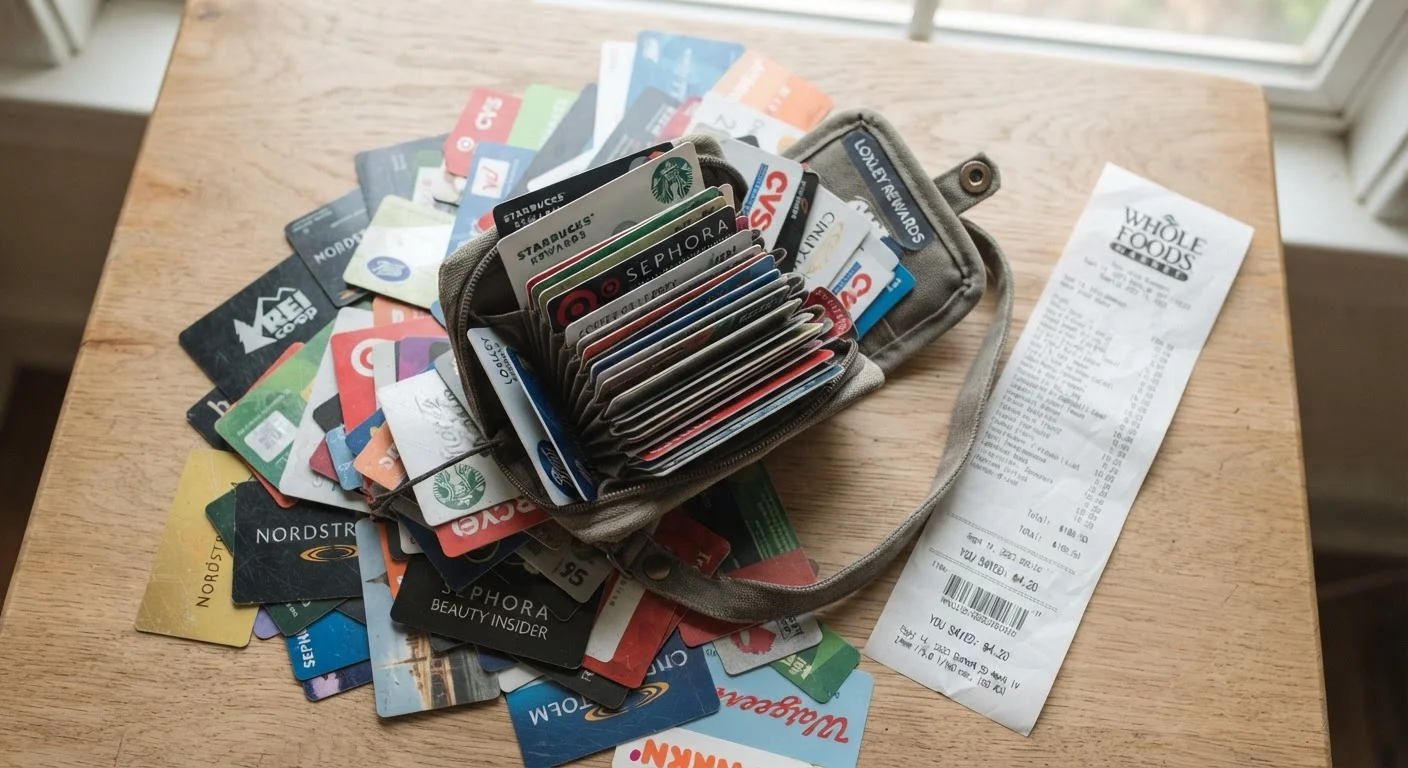
Photo credit: InsightsGrove.com | Discover Joy In Reading
In this article
A balanced look at how loyalty schemes work, where they genuinely save money, and where they quietly encourage you to spend more.
Key Takeaways
- Loyalty programmes can deliver real savings on purchases you were already going to make.
- The biggest risk is buying more than needed just to earn or maintain rewards.
- Points often lose value through expiry, devaluations, or restricted redemption windows.
- Programmes that require spending thresholds are designed to shift your budget - not reward it.
- Genuine value comes from using loyalty schemes passively, not chasing them actively.
Returns value on spending you'd make regardless
If you're buying groceries, fuel, or household staples from the same retailer anyway, a points programme layers modest returns onto purchases with no behavioral change required.
Early access and member-only price events
Some programmes offer genuine pre-sale windows or pricing tiers unavailable to non-members, which can be useful for planned, budgeted purchases - not impulse buys.
Consolidating spend concentrates rewards faster
Shoppers who already use a small number of retailers can accumulate points more quickly by consolidating, without necessarily spending more in total.
Free programmes carry no financial downside at baseline
Joining a no-fee scheme creates the possibility of return with zero upfront cost, provided membership doesn't subtly shift where or how often you shop.
Threshold requirements push spending beyond your plan
Programmes with minimum-spend tiers or bonus multipliers above certain amounts create artificial incentives to overspend in a single transaction to unlock a reward.
Points devalue or expire without warning
Retailers can and do reduce the redemption value of points unilaterally. Accrued balances that feel like savings can quietly shrink before you use them.
Brand loyalty costs you price comparison
Concentrating purchases at one retailer to accumulate points means you're less likely to check whether a competitor offers a lower price on the same item.
Psychological near-completion effects drive unnecessary purchases
The closer you are to a reward threshold, the more likely you are to make a purchase you wouldn't have otherwise - a well-documented effect programme designers rely on.
Data collection enables targeted upselling
Your purchase history is a detailed behavioral profile that retailers use to time personalized promotions, often designed to move margin-rich products rather than to give you deals.
How Loyalty Programmes Actually Work
Loyalty programmes are structured retention tools. Retailers offer them because repeat customers spend more over time and cost less to acquire than new ones. Understanding that framing - that the programme exists to serve the retailer's interests first - is the starting point for evaluating any scheme honestly.
Most programmes fall into a few categories: points-per-dollar-spent systems, tiered status models that unlock perks as you hit spending thresholds, and punch-card or visit-based schemes. Some are free to join; others carry annual fees that need to be offset by actual rewards to make sense financially.
The mechanics are designed with behavioral psychology in mind. Near-completion effects ("you're 50 points away from a reward") and status anxiety ("maintain Gold to keep your benefits") are deliberately engineered features, not incidental ones. Recognizing these pressure points is the first step toward using programmes on your own terms. For a broader look at how spending patterns form, see habits that quietly drain your budget.
Where Loyalty Programmes Genuinely Help
There are real scenarios where loyalty programmes add value without manipulating behavior.
Returns value on spending you'd make regardless
If you're buying groceries, fuel, or household staples from the same retailer anyway, a points programme layers modest returns onto purchases with no behavioral change required.
Early access and member-only price events
Some programmes offer genuine pre-sale windows or pricing tiers unavailable to non-members, which can be useful for planned, budgeted purchases - not impulse buys.
Consolidating spend concentrates rewards faster
Shoppers who already use a small number of retailers can accumulate points more quickly by consolidating, without necessarily spending more in total.
Free programmes carry no financial downside at baseline
Joining a no-fee scheme creates the possibility of return with zero upfront cost, provided membership doesn't subtly shift where or how often you shop.
The common thread across these advantages: the programme rewards existing behavior rather than creating new spending. If you already fill up at the same gas station, shop at the same grocery chain, or fly the same airline for work, opting into the associated scheme is low-effort value capture. Comparing loyalty schemes to cashback cards can also help clarify which structure returns more for your specific habits.
Where Loyalty Programmes Backfire
The downsides aren't hypothetical - they're built into the programme design.
Threshold requirements push spending beyond your plan
Programmes with minimum-spend tiers or bonus multipliers above certain amounts create artificial incentives to overspend in a single transaction to unlock a reward.
Points devalue or expire without warning
Retailers can and do reduce the redemption value of points unilaterally. Accrued balances that feel like savings can quietly shrink before you use them.
Brand loyalty costs you price comparison
Concentrating purchases at one retailer to accumulate points means you're less likely to check whether a competitor offers a lower price on the same item.
Psychological near-completion effects drive unnecessary purchases
The closer you are to a reward threshold, the more likely you are to make a purchase you wouldn't have otherwise - a well-documented effect programme designers rely on.
Data collection enables targeted upselling
Your purchase history is a detailed behavioral profile that retailers use to time personalized promotions, often designed to move margin-rich products rather than to give you deals.
The data retailers collect through loyalty programmes also has value to them that isn't always transparent to members. Detailed purchase histories allow for personalized price testing and targeted promotions engineered to move specific inventory, not to benefit the shopper. Before signing up for any scheme, it's worth applying a structured framework - evaluating whether a promotion genuinely benefits you is a useful starting point.
Annual Fee Programmes: Do the Math First
Fee-bearing loyalty or membership programmes require you to spend enough - and redeem enough - to offset the cost before any net benefit appears. A $99 annual fee that returns $80 in rewards is a net loss. Calculate your realistic redemption rate, not the theoretical maximum, before committing. This is general information; your individual situation will vary.
Making an Honest Assessment Before You Commit
Before joining - or continuing with - a loyalty programme, run through a short set of questions:
- Would I shop here at this frequency without the programme? If the honest answer is no, the programme is shaping your spending, not rewarding it.
- What does one point actually convert to in dollar terms? Many programmes obscure this deliberately. Calculate the redemption rate before assuming it's generous.
- Do the points expire or devalue regularly? If redemption windows are short or the retailer has a history of devaluations, the stored value is less reliable than it appears.
- Is there an annual fee? Fee-bearing programmes need to outperform their cost to justify membership.
Programmes tied to travel spending carry additional complexity. Understanding what airline and hotel points are realistically worth can help set expectations before you redirect spending toward earning them. For broader budgeting context, the everyday budgeting hub covers how to keep discretionary spending structured.
~$360B
Estimated global loyalty programme market value
Industry analysts have placed the global loyalty management market in the hundreds of billions, reflecting how central these programmes are to retail revenue strategy - not consumer benefit.
~50%
Loyalty points that go unredeemed
Research from multiple loyalty industry reports consistently finds that roughly half of all earned points are never redeemed, representing value that stays with the retailer.

Author
Savvy Shopping Editorial Team
Savvy Shopping Editorial Team is the collective byline for our editorial team and contributor network. Articles published under this byline or an editorial pen name are researched, written, and reviewed according to our editorial standards for clarity, consistency, and independence before publication.
View all articles →