
Researching a Product from Scratch: A Framework Anyone Can Use
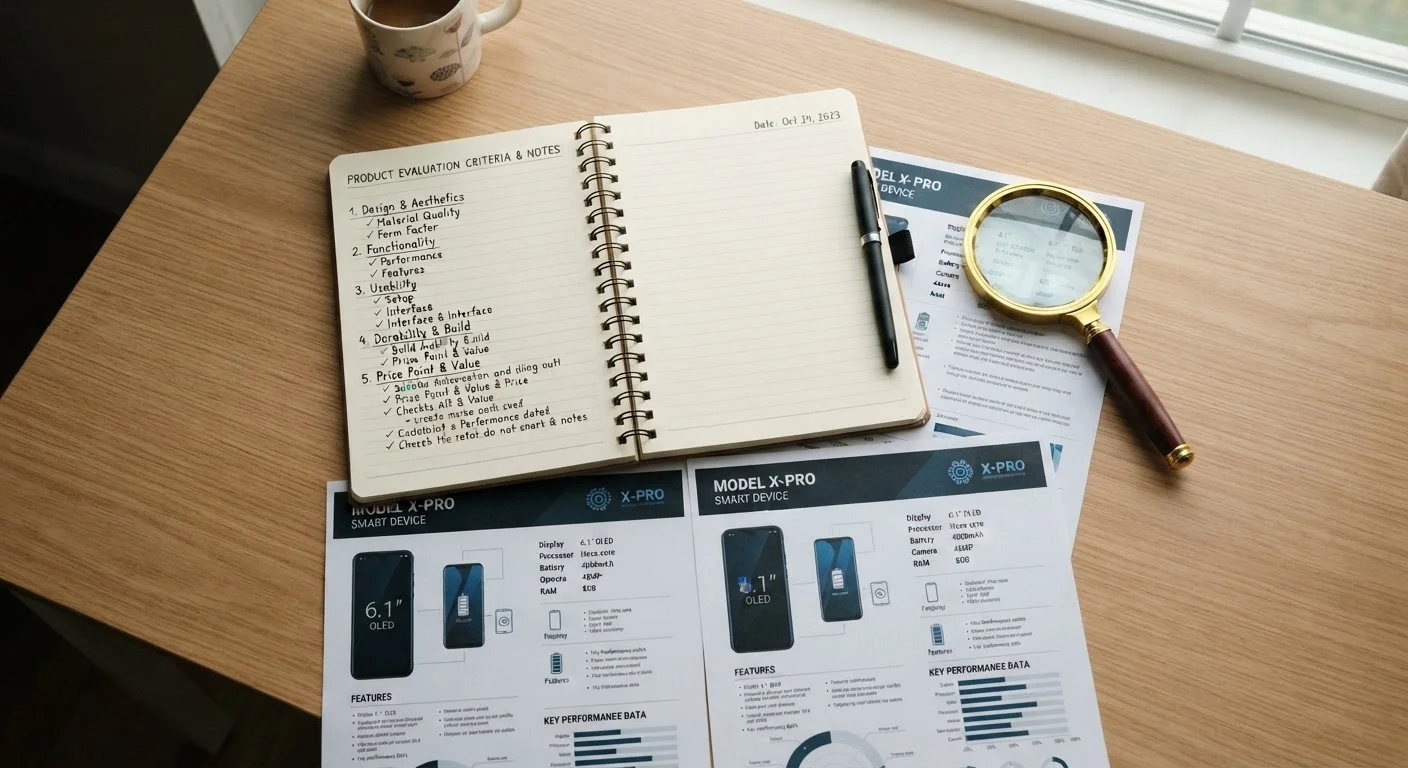
Photo credit: InsightsGrove.com | Discover Joy In Reading
In this article
A structured approach to evaluating any product independently — from defining your needs to verifying quality before spending a cent.
Key Takeaways
- Define your specific needs before reading a single review or spec sheet.
- Specs only matter in context - learn what each metric actually affects in use.
- No single source is enough; credible research triangulates across independent types.
- Value is relative to your use case, not to a product's feature count or price tier.
- Incentives shape information - always ask who published something and why.
Why Most Product Research Goes Wrong
Most people don't start product research - they start product browsing. They land on a retail page, scan a few bullet points, skim a handful of reviews, and make a decision. That process looks like research but skips the step that actually matters: deciding what you need before you encounter anything designed to sell you something.
The result is predictable. You buy a product optimized for someone else's use case, pay for features you'll never use, or miss a quality problem that a more structured look would have surfaced. The framework below is a corrective: a repeatable process for evaluating any product independently, regardless of category.
Specification (spec)
A measurable attribute of a product, such as weight, capacity, or processing speed, published by the manufacturer to describe what the product can do.
Use case
The specific real-world task or scenario you need a product to handle. A product's suitability depends heavily on whether it matches your use case, not just its general feature set.
Source triangulation
The practice of comparing information from multiple independent source types - such as lab tests, user forums, and manufacturer data - to reach a more reliable conclusion than any single source provides.
Incentivized review
A product review written by someone who received a free product, discount, or payment in exchange for their feedback, which may compromise the objectivity of their assessment.
Total cost of ownership
The full financial cost of a product over time, including the purchase price plus ongoing expenses like consumables, accessories, maintenance, or required subscriptions.
Step 1: Define Your Actual Requirements
Before opening a browser tab with product listings, write down the specific job you need this product to do. Not a vague sense of the category - a concrete list of functional requirements ranked by priority. What tasks must it handle? What constraints apply (physical size, compatibility, frequency of use)? What would make it a failure for your situation?
This step matters because it creates a filter. Without it, every feature a manufacturer highlights becomes potentially relevant, and you end up evaluating products on their terms rather than yours. Building your own evaluation criteria before you start shopping walks through this process in more depth and is worth reading before your first serious purchase research session.
Write Your Requirements Before Searching
Keep your requirements list open while researching. Every time you feel drawn to a feature not on your list, ask whether it genuinely addresses a need you have - or whether it's simply compelling because it's been presented well. Staying anchored to your original criteria prevents scope creep and keeps your evaluation honest.
Step 2: Understand the Spec Sheet
Once you know what you need, you can read a specification sheet critically. The key question for every listed spec: does this metric affect the specific tasks on my requirements list? Manufacturers list specs that flatter the product, not necessarily the ones that matter most to you.
Focus on learning what each relevant metric actually measures in practice. A higher number is not always better - context determines whether a specification represents meaningful performance for your use case. Where official specs are incomplete or vague, look for independent teardown communities, standards body documentation, or category-specific technical forums that discuss what specs actually predict about real-world performance.
Step 3: Triangulate Across Source Types
No single source should determine your conclusion. Different source types have different strengths, biases, and blind spots:
- Manufacturer materials provide complete spec data but are inherently promotional.
- Independent lab or publication tests apply consistent methodology but vary in rigor and funding transparency.
- Long-term user feedback surfaces durability and reliability issues that short-term tests miss, but volume and incentive problems affect platform-hosted reviews.
- Specialist communities (forums, subreddits focused on a category) often contain candid, technically informed discussion from people with no stake in your purchase.
When these sources broadly agree, your confidence in a conclusion is justified. When they contradict each other, investigate why before deciding. Our source guide for independent shoppers maps out where to find each type. For evaluating the reviews you find, The Anatomy of a Trustworthy Product Review explains what credible assessments look like.
Publication Funding Shapes What Gets Tested
Many product review sites and publications generate revenue through affiliate arrangements with the products they cover. This doesn't automatically make their testing dishonest, but it creates a structural incentive that can influence which products get tested, how results are framed, and which conclusions are emphasized. Always check whether methodology and funding relationships are disclosed before treating a publication's verdict as independent.
Step 4: Stress-Test the Value Claim
Value is not a feature list divided by price. A product with fewer features that reliably performs the tasks you actually need represents better value than a fully-featured one that underperforms on your priorities. To stress-test any value claim, ask:
- Does it meet all of my must-have requirements?
- Are there documented failure modes relevant to my use case?
- What does ownership cost beyond the purchase price (consumables, maintenance, compatibility requirements)?
- Is the price appropriate given independent assessments of build and performance quality?
This is also the point to verify that the information supporting the value claim is genuinely independent. Content that looks like journalism but earns revenue from the products it recommends is structured advertising, not analysis. This is general financial education - for decisions involving significant spend, consulting a financial professional about your overall budget priorities is worthwhile.
Putting the Framework Into Practice
The four steps above - requirements definition, spec interpretation, source triangulation, and value stress-testing - form a loop rather than a linear checklist. New information from Step 3 may sharpen your requirements from Step 1. A spec you dismissed may become relevant once you understand its real-world implications.
Practice makes the process faster. The first time you apply it to a new category, the research will take longer because you're also learning category-specific terminology and quality signals. By the second or third product in a category, you'll have a working knowledge base that makes subsequent research substantially more efficient.
Before you finalize any non-essential purchase, run your conclusions through the Smart Shopper's Pre-Purchase Checklist - a structured set of questions designed to catch blind spots before you commit. And if you've done research in the past and are returning to a category, check when to re-evaluate what you think you know - markets shift, and conclusions have expiration dates.
Source Guide for Independent Shoppers
A structured overview of the source types - from standards bodies to teardown communities - that support independent product research, with guidance on how to use each effectively.
Category Buyer Guides Hub
Unbiased overviews of what factors matter most across common product categories, useful for learning the relevant quality signals before you start researching a specific item.
Pre-Purchase Checklist
A structured set of questions to run through before committing to any non-essential purchase, designed to surface blind spots and confirm the decision fits your actual needs and budget.
Frequently Asked Questions

Author
Savvy Shopping Editorial Team
Savvy Shopping Editorial Team is the collective byline for our editorial team and contributor network. Articles published under this byline or an editorial pen name are researched, written, and reviewed according to our editorial standards for clarity, consistency, and independence before publication.
View all articles →