
How Clothing Fabric Composition Affects Durability and Comfort
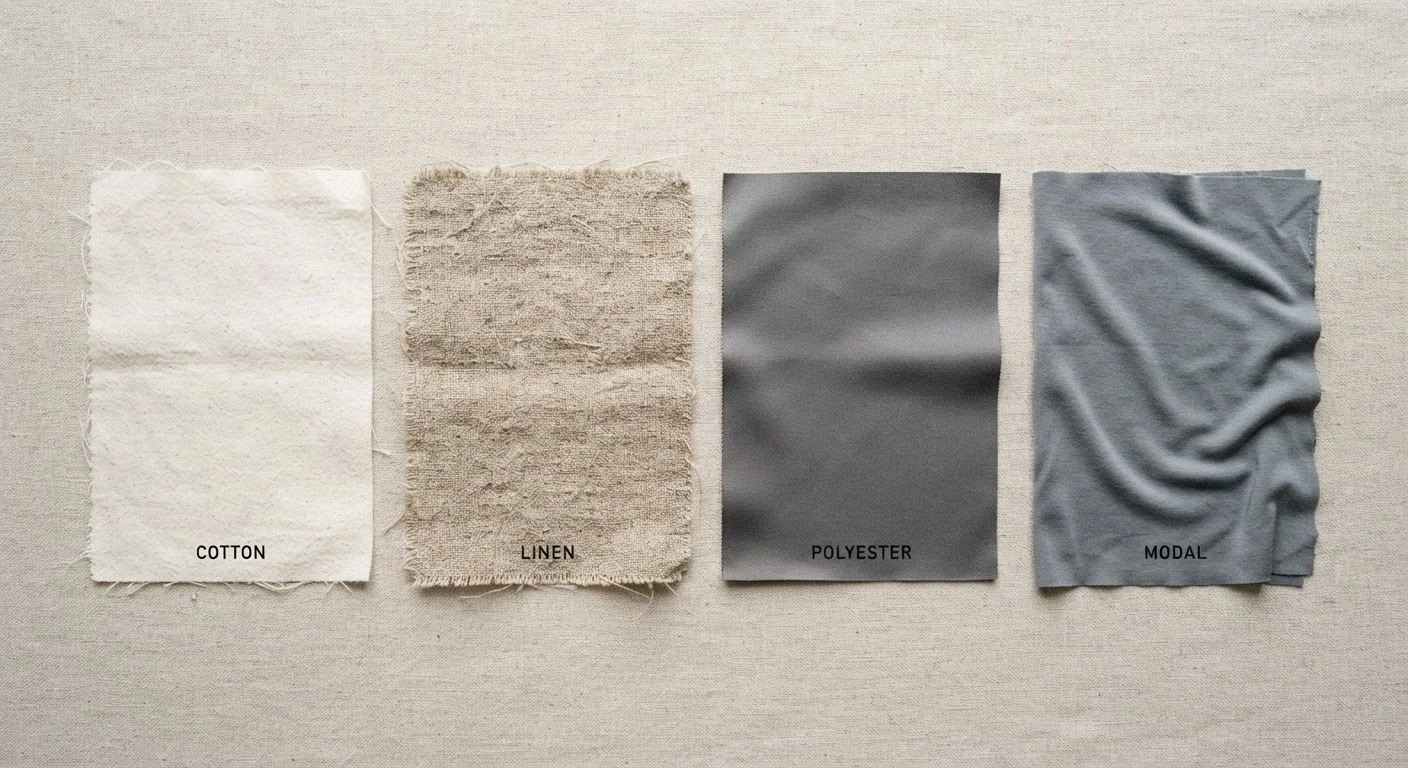
Photo credit: InsightsGrove.com | Discover Joy In Reading
In this article
Polyester, cotton, linen, modal — learn how fabric blends behave over time and in different climates before you buy.
Key Takeaways
- Natural fibers like cotton and linen breathe well but tend to wrinkle and wear faster than synthetics.
- Polyester resists shrinking and fading but traps heat and can pill over time.
- Blended fabrics often offer a middle ground - balancing comfort with durability.
- Higher natural fiber content generally signals more comfort; higher synthetic content usually means longer structural life.
- Reading care labels alongside fabric composition helps predict how a garment will age.
Why Fiber Type Is the Starting Point
Every garment begins with a fiber - and that choice shapes everything downstream. Fibers fall into two broad categories: natural (cotton, linen, wool, silk) and synthetic (polyester, nylon, acrylic). Semi-synthetics like modal and bamboo viscose sit in between, derived from natural sources but processed chemically.
Natural fibers are generally more breathable and biodegradable, but they're also more prone to shrinking, wrinkling, and wearing through at friction points. Synthetics hold their shape, resist moisture absorption, and are typically cheaper to produce - but they can feel less comfortable in warm weather and are more prone to static and pilling.
Understanding this basic split helps you read a fabric label as actual product information, not just fine print. For a broader look at how construction quality factors into long-term value, see how to research garment durability before you buy.
~35%
Global apparel fiber share held by polyester
Polyester has been the world's most-used apparel fiber by volume for over a decade, according to Textile Exchange fiber market reports.
3-5%
Typical spandex content that enables stretch recovery
Textile engineers note that even minimal elastane content - often between 2% and 5% - significantly improves a garment's ability to return to its original shape after wear.
Common Fabrics and How They Behave
Cotton is the most widely used clothing fiber worldwide. It absorbs moisture, breathes well, and feels comfortable on most skin types. The trade-off: it wrinkles easily, loses shape over time, and can shrink if washed in hot water. Higher thread counts in cotton typically indicate a denser weave and longer life.
Linen is even more breathable than cotton and gets softer with each wash, making it a good long-term investment - but it wrinkles severely and can feel stiff when new.
Polyester resists shrinking and fading, dries fast, and holds dye well. Drawbacks include heat retention and a tendency to pill after repeated abrasion. Pure polyester garments also trap odor over time.
Modal drapes softly, resists shrinking, and stays color-stable - making it popular for basics and underwear. It's less durable under friction than polyester but more comfortable against skin.
Nylon is the strongest synthetic fiber by weight, used in activewear and outerwear for its abrasion resistance and stretch recovery.
How Blends Change the Equation
Most clothing today uses fiber blends - and for good reason. A 65/35 cotton-polyester blend, for instance, keeps much of cotton's breathability while borrowing polyester's wrinkle resistance and dimensional stability. This is why many dress shirts and work pants use that ratio.
Spandex (also labeled elastane or Lycra) is rarely used above 5% in most garments, but even at 2-3% it dramatically improves stretch recovery. If you've noticed how some jeans bounce back to shape and others sag at the knees, spandex content is often the differentiator.
Wool blends with synthetics tend to reduce the itchiness of pure wool while retaining warmth. However, a wool-acrylic blend will pill more readily than pure merino wool, so the trade-off isn't always favorable.
Check Blend Percentages Before Buying
When comparing two similar garments, pull up the fabric composition - often listed in product descriptions or on in-store tags. A slightly higher natural fiber percentage can meaningfully affect day-to-day comfort, especially in warmer months. Don't assume price reflects composition; some budget garments use better blends than premium-priced alternatives.
Reading Labels Like a Buyer
Fabric composition is required by federal law on most clothing sold in the US, and the label must list fibers in order of predominance. That means the first fiber listed is the most present. A garment labeled "polyester, rayon, spandex" is primarily polyester - useful to know if you run warm or prefer natural materials.
Care instructions are a proxy for durability expectations. A "dry clean only" label on a natural-fiber garment often signals that the manufacturer knows it won't survive machine washing intact. Conversely, garments that can be machine-washed and tumble-dried without restriction are generally engineered to handle everyday use.
Pairing fabric knowledge with construction signals - seam reinforcement, stitching density, lining quality - gives you a much clearer picture of what a piece of clothing is actually worth versus what it costs. Use both sets of signals together rather than relying on brand name or price tag alone.
Fabric Performance Varies by Weave and Finish
Two garments with identical fiber content can feel and wear very differently depending on how the fabric was woven or knit, and whether it received finishing treatments like mercerization or sanforization. Fabric composition is a strong signal, but it's one input - construction quality and finishing processes also matter.
Frequently Asked Questions

Author
Savvy Shopping Editorial Team
Savvy Shopping Editorial Team is the collective byline for our editorial team and contributor network. Articles published under this byline or an editorial pen name are researched, written, and reviewed according to our editorial standards for clarity, consistency, and independence before publication.
View all articles →