
Epoxy, Wood Filler, or Caulk - Choosing the Right Gap Fixer
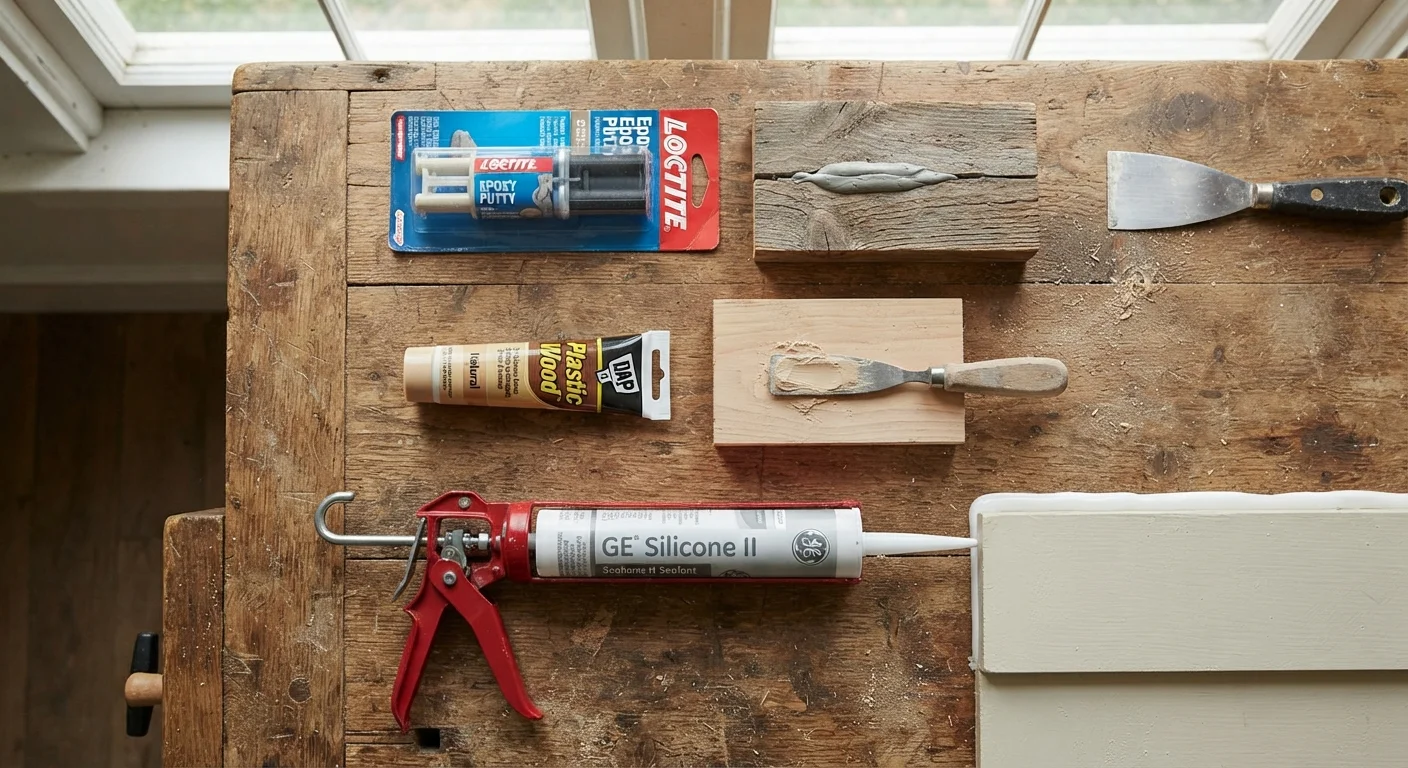
Photo credit: InsightsGrove.com | Discover Joy In Reading
In this article
These three fillers look similar on the shelf but behave very differently. Match the right material to your repair before you start.
Key Takeaways
- Epoxy is the strongest option and works best for structural gaps or damaged wood that needs to bear load.
- Wood filler is ideal for small cosmetic repairs on stationary surfaces that will be painted or stained.
- Caulk handles movement - use it wherever two surfaces expand, contract, or meet at a joint.
- Using the wrong filler often means the repair fails within months, costing more to redo.
- Surface prep and dry conditions matter as much as product choice for a lasting result.
Why the Wrong Filler Fails Fast
Walk into any hardware store and you'll find epoxy, wood filler, and caulk sitting within a few feet of each other. They look interchangeable. They're not. Each one is engineered around a specific set of conditions - rigidity, flexibility, adhesion, and moisture exposure - and using the wrong one for a repair often means the fix cracks, shrinks, or separates within a season.
The good news: once you understand what each material is actually doing, the choice becomes straightforward. This guide covers the key differences so you don't waste a Saturday on a repair that won't last. For a broader overview of repair materials and how to scope a job before spending anything, see the complete budget home repair reference.
| Epoxy | Wood Filler | Caulk | |
|---|---|---|---|
| Best use case | Structural or rotted wood repair | Small cosmetic holes and cracks | Moving joints and seams |
| Flexibility | None - fully rigid when cured | None - rigid when dry | High - designed to flex |
| Moisture resistance | Good when properly applied | Poor - absorbs moisture | Varies by type; silicone is excellent |
| Paintable | Yes, after full cure | Yes, most formulas | Depends - latex yes, silicone no |
| Indoor vs outdoor | Both | Indoor only | Both (use exterior-rated type outside) |
| Relative cost | Higher | Lower | Low to moderate |
| Max gap size | Large voids possible | Up to ~1/4 inch | Typically up to 1/2 inch |
Epoxy: Maximum Strength, Minimum Forgiveness
Two-part epoxy (a resin and a hardener mixed together) cures into an extremely hard, dense material that bonds to wood at a molecular level. Once fully cured - typically 24 hours for full strength - it can be drilled, sanded, shaped, and painted. It won't shrink.
Epoxy is the right choice when the gap is structural: rotted porch columns, a damaged door jamb, exterior windowsill sections that have crumbled away. It resists moisture well when properly applied, making it one of the few fillers suited to exterior wood that stays wet seasonally.
Don't Use Epoxy Near Open Joints
Epoxy's rigidity is a liability at any joint where the surrounding material will expand or contract. If applied across a moving seam - such as where two pieces of trim meet at a corner - it will crack out cleanly as the wood shifts. Identify whether your repair is a static void or a dynamic joint before committing to epoxy. If you're unsure, caulk the joint first and fill any static voids separately.
The trade-off is cost and working time. Two-part epoxy is significantly more expensive per ounce than wood filler or caulk, and it sets on a fixed clock - once mixed, you have a limited open time (often 5-30 minutes depending on the product type) before it becomes unworkable. It also doesn't flex at all, so it's wrong for any joint where two surfaces move relative to each other.
Wood Filler: The Cosmetic Specialist
Wood filler (sometimes called wood putty, though the two differ slightly in composition) is a water- or solvent-based paste designed to fill nail holes, small cracks, and surface dings in stationary wood. It dries hard, sands smooth, and takes paint well.
Its core limitation is also its defining characteristic: it doesn't flex, and it doesn't bond as strongly as epoxy. On surfaces that shift with humidity - interior wood floors, for example - solid wood filler often cracks out within a year because the surrounding wood moves while the filler stays rigid. It's also not suited to gaps wider than about a quarter-inch; large voids tend to shrink unevenly as it dries.
Tinting Wood Filler to Match
Most water-based wood fillers accept a small amount of latex paint stirred in before application, which helps the patch blend with the surrounding wood tone after drying. Test on scrap first - the dried color will be lighter than the wet mixture. This trick is most effective under a painted finish, less so under clear stain.
For small cosmetic fixes on painted trim, furniture, or cabinets that you're about to refinish, wood filler is practical and low-cost. Don't use it outdoors or in wet areas - most formulations absorb moisture and break down.
Caulk: The Only Option That Moves With Your Home
Caulk is a flexible sealant, not a structural filler. It's designed specifically for joints where two surfaces meet and where thermal expansion, humidity, or building movement will cause that joint to open and close slightly over time. The gap where your baseboard meets the floor, where window trim meets siding, where a bathtub deck meets a tile wall - these all need caulk, not filler.
The material family is broad. Silicone caulk is waterproof and very flexible but hard to paint. Latex or acrylic caulk is easier to tool and paint but offers less water resistance. Sanded caulk is used for wider grout-style joints. Choosing within the category matters: match the caulk type to the surface and environment.
One important note: caulk does not add strength. It seals and bridges movement, but a gap that needs structural support still needs epoxy or a mechanical fix first. For tile joints specifically, the rules around what gets caulked versus grouted are worth understanding before you start - the DIY tile repair overview covers that distinction in detail.
How to Make the Call Before You Start
Run through three questions before opening anything:
- Will the surfaces move? If yes - use caulk. Any joint between dissimilar materials (wood to drywall, tile to tub) moves. Any exterior joint moves seasonally.
- Is this structural or just cosmetic? Damage that affects the integrity of the wood - rot, large voids, load-bearing trim - calls for epoxy. A nail hole or shallow scratch is a wood-filler job.
- Will it be painted, and is it indoors? Paintable wood filler is reliable for interior surfaces that won't move. Don't use it as a substitute for caulk at joints.
Prep also matters regardless of which product you use. Remove loose material, let the surface dry fully, and follow the cure time before sanding or painting. A well-prepped repair with a modest material will outlast a sloppy repair with a premium one.

Author
Home & Living Editorial Team
Home & Living Editorial Team is the collective byline for our editorial team and contributor network. Articles published under this byline or an editorial pen name are researched, written, and reviewed according to our editorial standards for clarity, consistency, and independence before publication.
View all articles →