
DIY vs. Workshop: Knowing Which Jobs Are Worth Doing Yourself
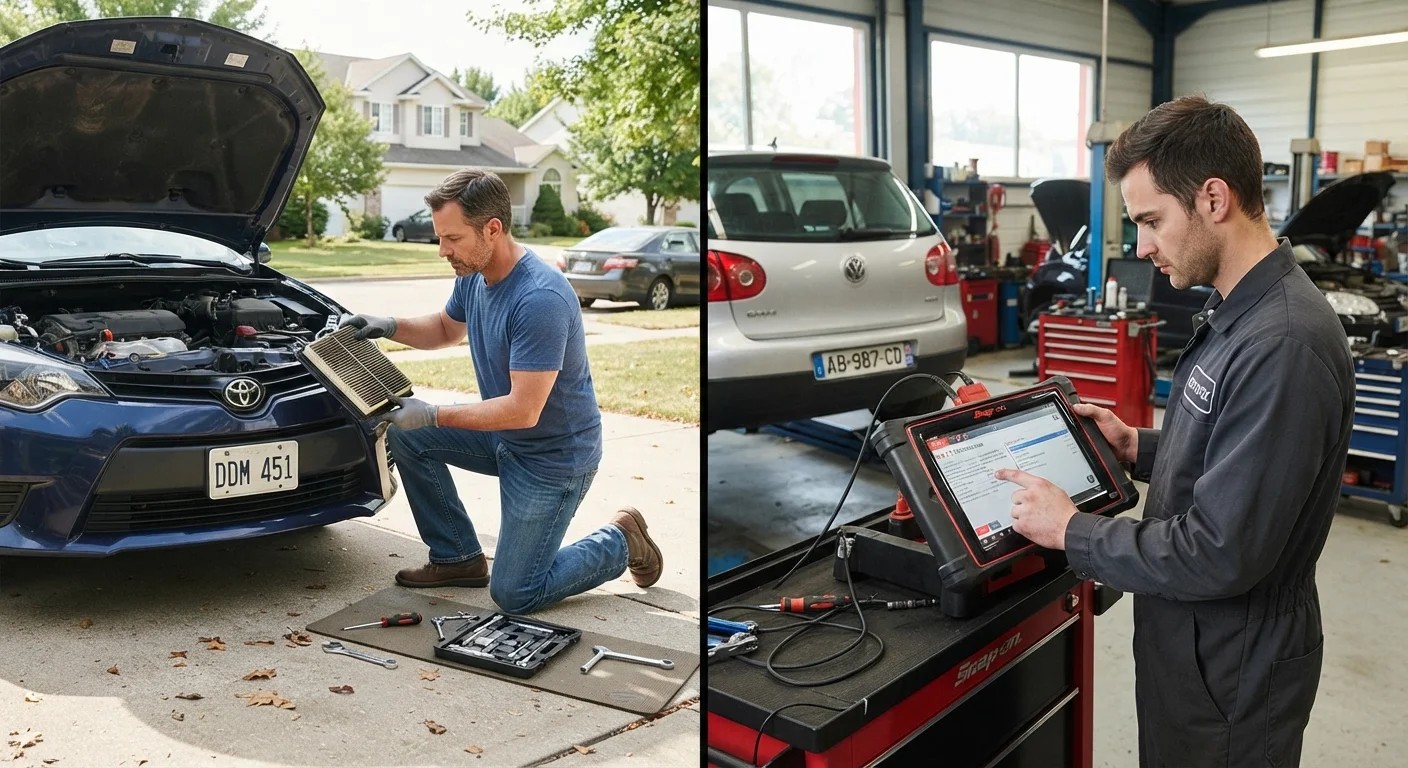
Photo credit: InsightsGrove.com | Discover Joy In Reading
In this article
A balanced breakdown of which routine maintenance tasks most car owners can safely handle themselves and which ones genuinely warrant a qualified mechanic.
Key Takeaways
- Several common maintenance tasks - air filters, wiper blades, cabin filters - are genuinely safe for most owners to handle at home.
- Brake system work, suspension repairs, and anything involving airbag systems should always go to a qualified mechanic.
- The true cost of DIY includes tools, time, and the risk of an error that creates a more expensive problem downstream.
- A full service by a qualified mechanic catches issues that routine DIY maintenance will miss entirely.
- Knowing which category a job falls into is the first step to making a confident, cost-effective decision.
Why the DIY vs. Workshop Question Actually Matters
For budget-conscious car owners, the impulse to handle maintenance yourself is understandable - workshop labor rates in the US typically range from $80 to $150 per hour, and routine service costs add up fast. But the decision isn't simply about saving money in the short term. A poorly executed repair on the wrong system can turn a $30 job into a $300 correction - or worse, create a safety risk on the road.
The goal isn't to avoid mechanics entirely. It's to know clearly which jobs fall within a confident DIYer's reach and which ones genuinely require professional equipment, training, and liability. That distinction protects your wallet and your safety at the same time. See our Car Costs & Savings hub for broader strategies on keeping ownership expenses in check.
| Task | DIY Feasibility | Risk Level | Tools Required | Typical Shop Cost (Labor) | |
|---|---|---|---|---|---|
| Engine air filter | High | Low | None or minimal | $20-$40 | |
| Wiper blade replacement | High | Very low | None | $15-$30 | |
| Tire pressure check | High | Very low | Pressure gauge | Often free at shop | |
| Brake pad replacement | Low (experience needed) | High | Torque wrench, jack stands | $150-$300 per axle | |
| Timing belt service | Very low | Very high | Specialized engine tools | $400-$1,000+ | |
| Suspension components | Very low | High | Specialized tools + alignment | $200-$600+ |
Tasks Most Owners Can Safely Handle at Home
A handful of maintenance jobs require minimal tools, carry low risk if done carefully, and come with clear manufacturer instructions in your owner's manual. These are the tasks where DIY genuinely pays off.
- Engine air filter replacement: Usually a clip or screw panel, no special tools needed. Filters are inexpensive, and the swap takes under 15 minutes for most vehicles.
- Cabin air filter replacement: Typically behind the glove box. The owner's manual shows the exact location. Straightforward and tool-free on most models.
- Wiper blade replacement: Blades clip or pin onto the wiper arm. Packaging often includes a simple how-to guide specific to common arm types.
- Tire pressure checks and top-ups: A quality tire pressure gauge costs under $15 and is a habit, not a repair. Correct tire pressure affects fuel economy, handling, and tire lifespan.
- Topping up windshield washer fluid: The reservoir is clearly marked under the hood. Use a fluid rated for your climate - some formulas are designed to handle freezing temperatures.
- Checking and topping up engine oil: Using the dipstick is a basic skill every owner should have. Adding oil between changes is maintenance; diagnosing why oil is low is a mechanic's job.
Start With Your Owner's Manual
Before attempting any maintenance task, locate the relevant section in your vehicle's owner's manual. It specifies the correct fluid types, filter part numbers, torque specs, and service intervals for your exact model. Using the wrong spec - even on a simple job - can cause premature wear or component damage. If you don't have a physical copy, most manufacturers offer digital versions on their official websites.
Jobs That Belong in a Qualified Workshop
Some tasks look approachable on video but involve safety-critical systems where an error has serious consequences - for you, your passengers, and other road users. These are not areas to learn on the job.
- Brake pad and rotor replacement: While changing pads is technically possible for an experienced DIYer, incorrect installation - wrong torque on caliper bolts, air in the hydraulic line, uneven pad seating - can cause brake failure. Most professional mechanics consider this a shop job for anyone without specific hands-on training.
- Suspension and steering components: Ball joints, tie rods, and control arm bushings affect how the car handles at speed. Incorrect installation can cause loss of control. These require alignment afterward, which needs specialist equipment.
- Timing belt or chain service: An engine out of time can cause catastrophic internal damage. The job requires precision and, in many vehicles, specialized holding tools.
- Anything involving the airbag system: Federal regulations and manufacturer guidance are unambiguous - SRS (Supplemental Restraint System) components must only be handled by trained technicians. Accidental deployment causes serious injury.
- Transmission and clutch work: Both require precision calibration and significant disassembly. Errors are expensive and can render the vehicle undriveable.
For a clear picture of what a professional service actually covers beyond these specific repairs, see what a full car service actually covers.
Don't Let Cost Pressure Compromise Safety
It can be tempting to attempt a complex repair to avoid a large workshop bill - but brake, steering, and suspension failures are among the leading causes of serious road accidents. If a job involves a safety-critical system and you don't have verified hands-on experience, the potential cost of getting it wrong far outweighs the labor savings. Budget for these services in your car ownership costs rather than improvising on critical systems.
Calculating the Real Cost of Doing It Yourself
DIY savings are real - but they're not always as large as they appear at first. Before committing to a job, factor in:
- Tool investment: A torque wrench, jack stands, and basic socket set are worthwhile long-term purchases. But if you need a specialized tool for a single job, renting or paying a shop may be more economical.
- Time: A mechanic who does a job daily will complete it in a fraction of the time a first-timer will. Value your time honestly.
- Risk of errors: Parts that need to be re-ordered, or damage caused by incorrect installation, eliminate any savings quickly. If a job goes wrong on a safety system, the costs - financial and personal - can be severe.
- Warranty implications: Some manufacturers and extended warranty providers require documented professional servicing. Check your coverage before opting out of shop visits entirely.
The broader principles here apply beyond cars - our article on when DIY saves you money and when it quietly costs more explores how the same decision framework applies to home repairs.
$80-$150/hr
Typical US mechanic labor rate
AAA estimates average shop labor rates across the US fall within this range, varying by region and shop type.
35%
Of car owners attempt DIY maintenance
Consumer surveys consistently show a significant share of US vehicle owners perform at least some of their own routine maintenance.

Author
Car Ownership Editorial Team
Car Ownership Editorial Team is the collective byline for our editorial team and contributor network. Articles published under this byline or an editorial pen name are researched, written, and reviewed according to our editorial standards for clarity, consistency, and independence before publication.
View all articles →