
Comprehensive vs. Third-Party Insurance: What Each Actually Covers
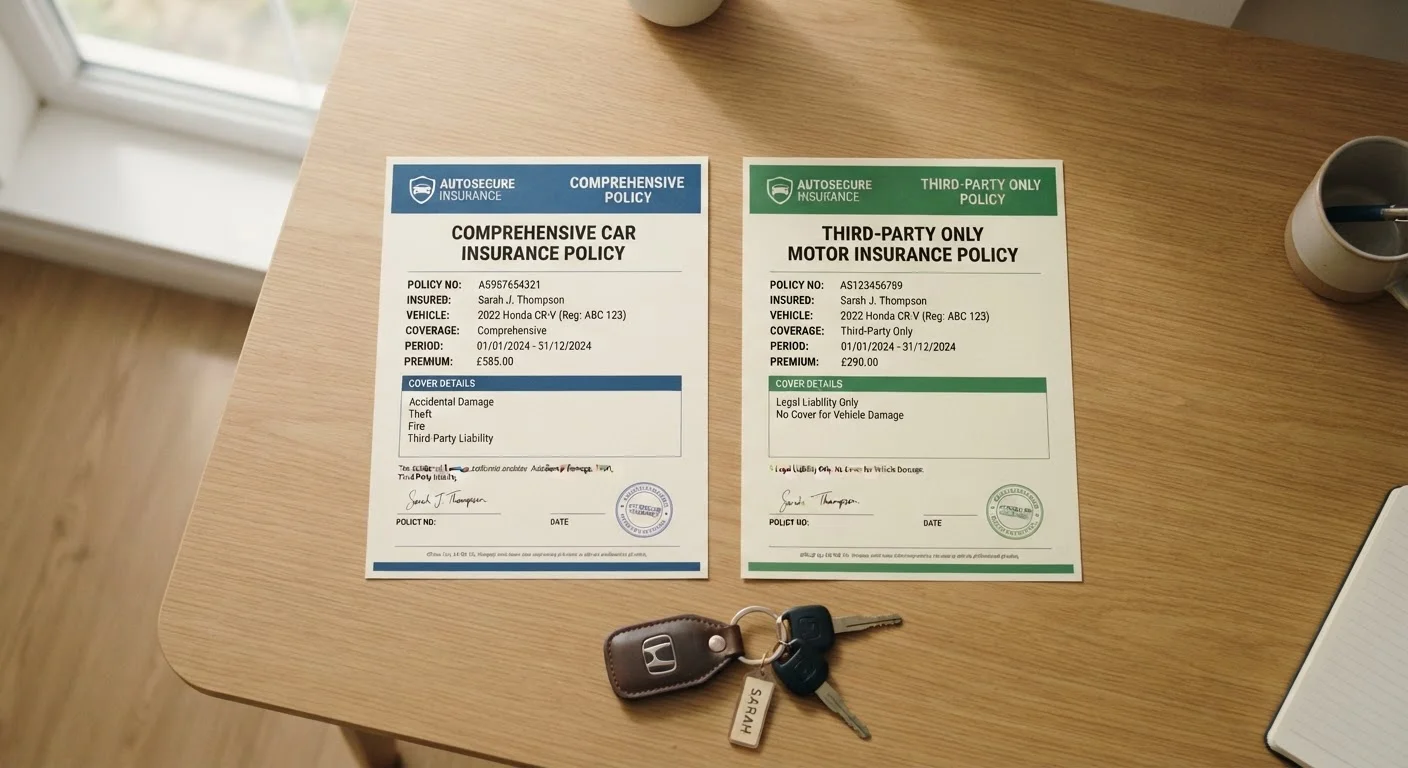
Photo credit: InsightsGrove.com | Discover Joy In Reading
In this article
Not all car insurance is equal. See what comprehensive and third-party policies cover — and where each leaves you exposed.
Key Takeaways
- Comprehensive insurance covers damage to your own vehicle, theft, and non-collision events like weather damage.
- Third-party insurance only covers damage or injury you cause to other people and their property.
- Neither policy type covers routine maintenance or mechanical breakdowns.
- Your vehicle's current market value is a key factor in deciding which tier makes financial sense.
- State minimum liability requirements vary - third-party coverage must at least meet your state's threshold.
- Premium differences between the two tiers can be significant but are not the only cost to consider.
What Each Policy Type Actually Covers
Comprehensive insurance is the broadest standard policy tier available in the US. Despite its name, it doesn't cover everything - but it does protect against a wide range of perils beyond collisions. Covered events typically include theft, vandalism, fire, flooding, hail, falling objects, and animal strikes. It also covers collision damage to your own vehicle (often sold as a combined comprehensive-and-collision policy). If your car is totalled or stolen, comprehensive coverage pays out up to the car's actual cash value, minus your deductible.
Third-party insurance - more commonly referred to in the US as liability coverage - covers damage or bodily injury you cause to other drivers, passengers, or their property. It does not pay anything toward your own vehicle's repair or replacement. Every US state requires some minimum level of liability coverage to legally operate a vehicle, though the required amounts vary significantly by state.
| Criterion | Comprehensive Insurance | Third-Party (Liability) Insurance |
|---|---|---|
| Damage to your own vehicle | Covered (collision + comprehensive perils) | Not covered |
| Damage to other vehicles/property | Covered | Covered |
| Injury to other parties | Covered | Covered |
| Vehicle theft | Covered | Not covered |
| Weather, fire, flooding | Covered | Not covered |
| Vandalism | Covered | Not covered |
| Mechanical breakdown | Not covered | Not covered |
| Typical relative premium cost | Higher | Lower |
| Required for financed vehicles | Yes (typically) | No |
One common misconception is that comprehensive covers mechanical failures or wear-and-tear - it does not. For that, see what a full car service actually covers to understand what maintenance costs you'll still need to budget for separately.
Where Each Policy Leaves You Exposed
The coverage gaps are where young drivers most often get caught off-guard.
With third-party only, you bear the full financial burden if your car is stolen, damaged by weather, or wrecked in an at-fault collision. If you cause an accident that totals your own car, you receive nothing from your insurer for your vehicle's loss. The other driver's repairs and medical bills are covered - yours are not.
With comprehensive (plus collision), the primary exposure is your deductible - the amount you pay out of pocket before the insurer covers the rest. Higher deductibles lower your premium but increase your financial exposure per claim. Additionally, payouts are capped at your car's actual cash value (ACV), which accounts for depreciation. If your car has depreciated significantly, the payout on a total-loss claim may be lower than you expect.
Actual Cash Value vs. Replacement Cost
Most standard auto policies pay out based on your vehicle's actual cash value (ACV) at the time of loss - not what it would cost to replace it with a similar new vehicle. Depreciation can make this figure significantly lower than you might expect, especially for vehicles more than three or four years old. Some insurers offer replacement cost coverage as an add-on, but it comes at a higher premium.
Neither policy type covers add-on roadside services by default. If that's a gap you want to close, it's worth understanding how costs compare - our breakdown of roadside assistance add-ons vs. standalone memberships can help you evaluate the options.
How to Decide Which Level of Cover Makes Sense
The standard rule of thumb used by many consumer finance educators: if your annual comprehensive premium plus your deductible exceeds 10% of your car's current market value, the financial case for comprehensive weakens. You can look up your vehicle's approximate market value through resources like Kelley Blue Book or NADA Guides to run this calculation yourself.
~77%
US drivers carrying comprehensive coverage
According to the Insurance Information Institute, roughly three in four US insured drivers carry comprehensive coverage, often because it is required by lenders.
$3,000-$5,000
Average vehicle theft loss per claim
The National Insurance Crime Bureau has reported average theft-related insurance losses in this range, highlighting the financial exposure of third-party-only policyholders.
If your vehicle is financed or leased, the decision is typically made for you - lenders almost universally require comprehensive and collision coverage as a loan condition. Dropping to liability-only on a financed vehicle would breach your loan agreement.
For drivers with paid-off older vehicles, the calculus is different. Self-insuring the vehicle's own damage (by maintaining an emergency fund) while carrying only the legally required liability coverage can be a rational strategy - provided you've honestly assessed the risk and your ability to absorb the loss. That said, this approach requires discipline and isn't right for everyone.
Once you've decided on your coverage tier, there's still room to reduce what you pay. Our guide on negotiating a lower car insurance premium covers practical approaches like adjusting your excess, improving your driving record, and bundling policies.
This article provides general information about car insurance coverage types and is not personalised financial or insurance advice. Policy terms vary by insurer and state. Consult a licensed insurance professional for guidance specific to your situation.

Author
Car Ownership Editorial Team
Car Ownership Editorial Team is the collective byline for our editorial team and contributor network. Articles published under this byline or an editorial pen name are researched, written, and reviewed according to our editorial standards for clarity, consistency, and independence before publication.
View all articles →