
Before You Land: A Pre-Trip Financial Checklist for International Travel
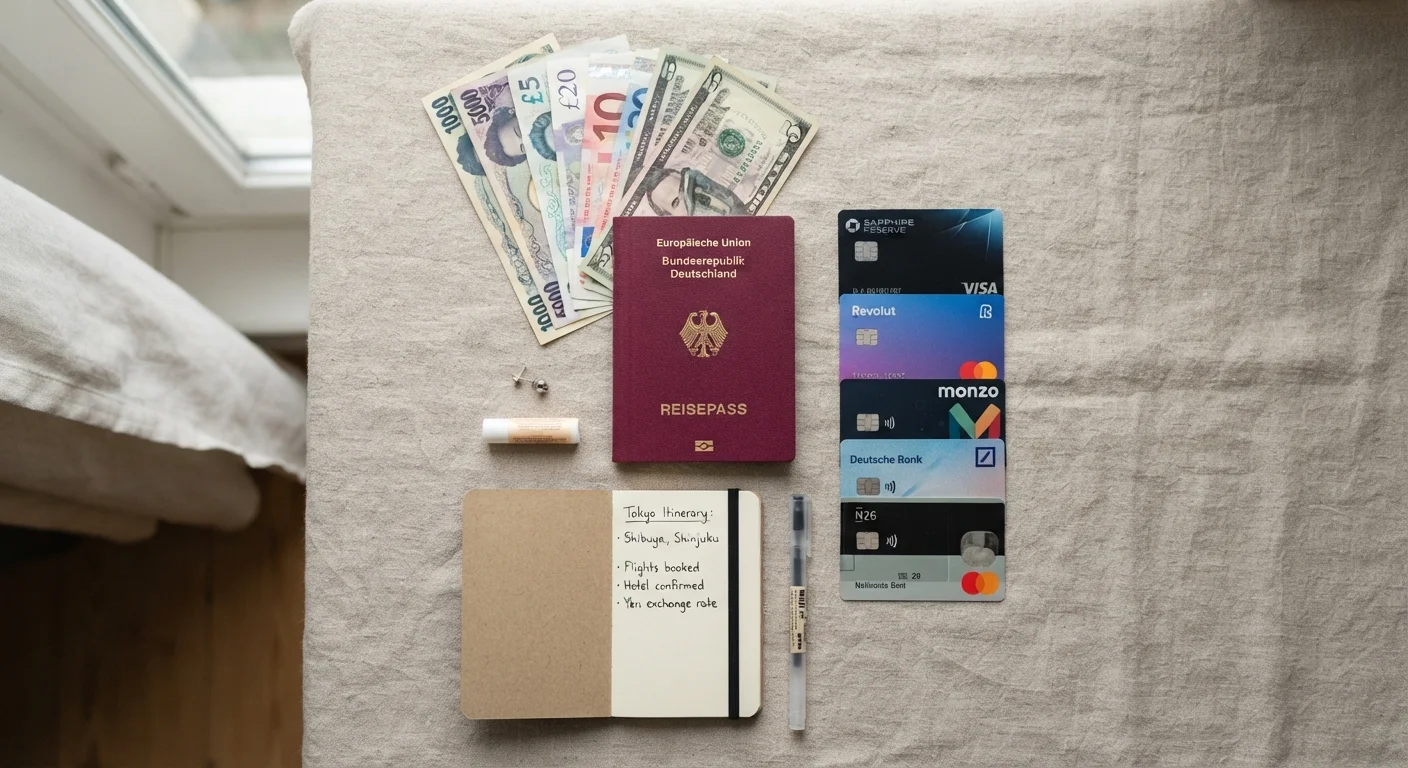
Photo credit: InsightsGrove.com | Discover Joy In Reading
Notify your bank, sort your cards, plan your cash strategy. Everything to handle before you board to avoid money headaches abroad.
Key Takeaways
- Notify your bank and card issuers before departure to prevent automatic fraud blocks on your account.
- At least one card in your wallet should carry no foreign transaction fees.
- Carrying a small amount of local currency at arrival helps you avoid poor exchange rates at the airport.
- A backup payment method stored separately from your primary wallet protects you if a card is lost or stolen.
- Check whether your destination is primarily cash-based or card-friendly so you can plan your daily spending accordingly.
- Set up account alerts and know your card's international customer service number before you fly.
Why Financial Prep Deserves Its Own Checklist
Most travelers spend weeks planning flights and accommodation, then give their finances about fifteen minutes of thought at the airport. That gap is where problems start — declined cards at check-in, surprise fees on every transaction, or scrambling for cash in a country where ATMs are scarce.
This checklist is built around a simple principle: the financial friction you prevent before you leave costs nothing. The friction you deal with mid-trip costs time, money, and energy you'd rather spend elsewhere. Whether this is your first international trip or your tenth, running through these steps a week before departure is one of the most reliable ways to protect your budget.
For a broader look at managing money throughout a trip — not just before departure — see our full guide to budget travel planning. And if you want to cross-reference your financial prep with a complete pre-trip audit, the pre-departure planning checklist covers the broader picture.
Bank and Card Notifications
Cards and Fees
Cash Strategy
Spending Limits and Budget Tracking
Emergency and Contingency Prep
Tools That Make This Easier
You don't need sophisticated software to complete this checklist — but a few practical resources will make the process faster and more reliable.
Your bank's mobile app
Use it to set travel notices, enable transaction alerts, and monitor your account in real time while overseas.
A no-foreign-transaction-fee credit or debit card
Eliminates the typical 1–3% surcharge on every purchase made in a foreign currency.
A secure digital note or password manager
Store international customer service numbers, card details, and account information somewhere accessible if your wallet is lost.
A travel budgeting app or spreadsheet
Tracks daily spending against your budget in your home currency and the local currency.
A money belt or hidden travel wallet
Keeps your backup card and emergency cash physically separate from your main wallet to protect against theft.
Once your financial prep is complete, your next step is making sure your bags are equally ready. Run through the pre-trip packing audit to catch anything you might have overlooked before you zip up. And if you're heading abroad for the first time, what first-timers abroad actually need to know covers the fundamentals of currency, transport, and staying safe without overspending.
Dynamic Currency Conversion: Always Decline It
When a card terminal abroad asks whether you'd like to pay in your home currency rather than the local currency, decline every time. This option — called dynamic currency conversion — lets the merchant set the exchange rate, and it is almost always significantly worse than the rate your bank or card network would apply. Always choose to pay in the local currency.
Airport Exchange Counters Are a Last Resort
Exchange bureaus and kiosks inside airports routinely offer exchange rates that are materially worse than those available at in-city bank ATMs or branches. If you need local currency on arrival, withdraw a small amount at an airport ATM on a fee-friendly card rather than exchanging cash at a counter. Check your destination's norms in advance — some airports have better ATM access than others.
This article is for general informational purposes only and does not constitute financial or legal advice. Consult a qualified financial professional for guidance specific to your situation. Verify all entry requirements, currency regulations, and banking policies directly with official sources and your card issuer before travelling.

Author
Travel Smarter Editorial Team
Travel Smarter Editorial Team is the collective byline for our editorial team and contributor network. Articles published under this byline or an editorial pen name are researched, written, and reviewed according to our editorial standards for clarity, consistency, and independence before publication.
View all articles →