
Coffee Maker Formats and the Trade-offs Each One Makes
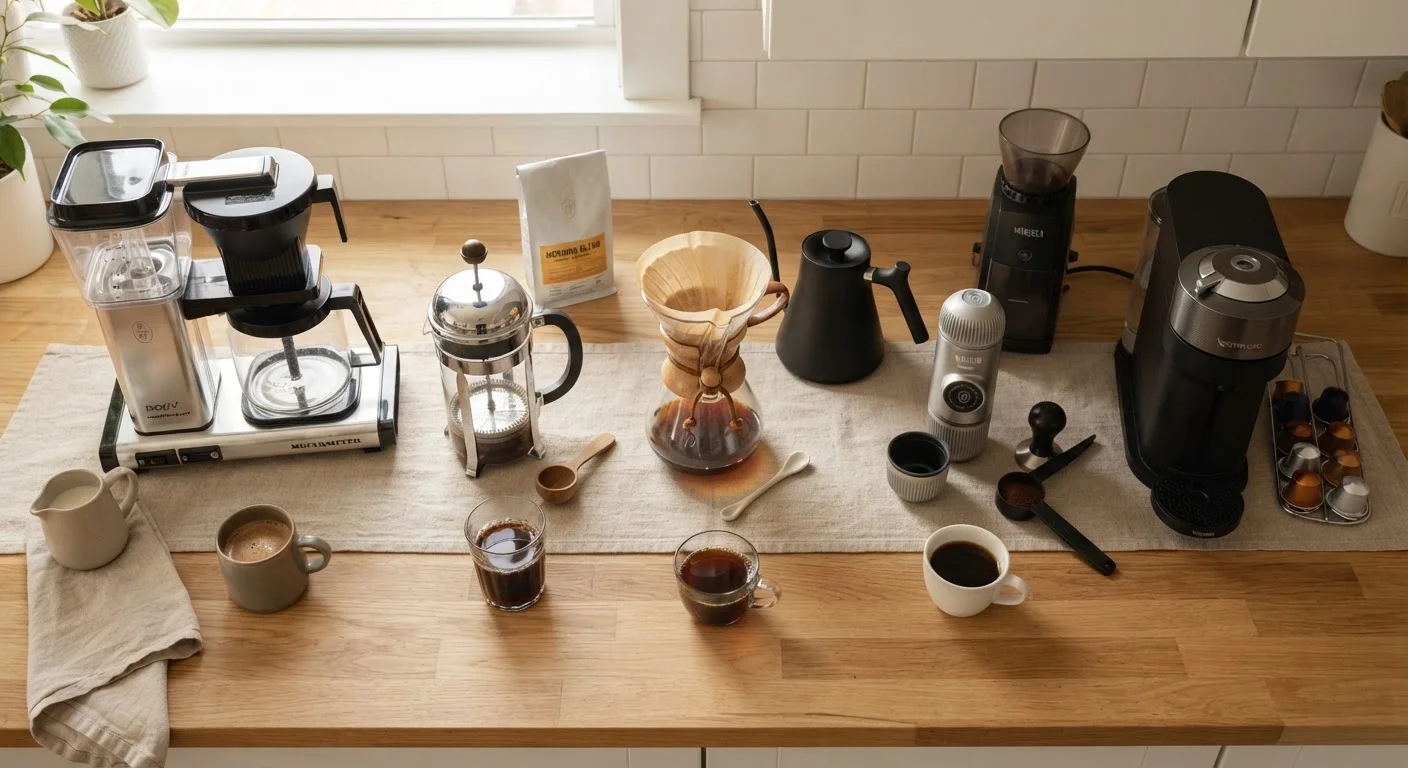
Photo credit: InsightsGrove.com | Discover Joy In Reading
In this article
Drip, pour-over, French press, espresso, pod — a clear breakdown of how each brewing method works and what it costs you.
Key Takeaways
- No single brewing format wins on every criterion - cost, convenience, and cup quality always involve trade-offs.
- Pod machines have low upfront costs but consistently higher per-cup costs than most other formats.
- Drip machines and French presses offer the lowest ongoing costs for regular daily drinkers.
- Espresso machines require the steepest learning curve and highest equipment investment of any home format.
- Understanding how each method works helps you match the format to your actual habits, not marketing claims.
Why the Format Matters Before the Price Tag
Walk into any kitchen retailer and you'll find coffee makers priced anywhere from $15 to over $1,000. That range isn't arbitrary - it maps directly to the brewing method inside the machine. Each format uses a different mechanism to extract flavor from ground coffee, and each mechanism carries a distinct set of trade-offs: upfront cost, per-cup cost, time, cleanup, and the kind of cup you actually get.
Before fixating on a price point, it helps to understand what you're actually buying into. The five formats below account for the overwhelming majority of home coffee equipment sold in the US. Each one is broken down by how it works and what it costs you in money, time, and effort.
Track Your Real Per-Cup Cost
Before buying any machine, calculate what you'd spend on coffee consumables over 12 months at your actual consumption rate - not just the sticker price. Divide the cost of a bag of coffee (or a box of pods) by the number of cups it makes. Multiply by how many cups you drink per week, then scale up. This single exercise often changes which format looks like the better deal.
The Five Main Brewing Formats
Drip Coffee Makers
Drip machines pump hot water through a flat-bottom or cone filter loaded with ground coffee, letting gravity pull the brew into a carafe below. They're the default American household format for a reason: they're automated, they make multiple cups at once, and they require minimal attention once set up.
Trade-offs: Equipment costs range from under $30 for a basic model to $200+ for machines with precise temperature control. Ongoing costs are low - a bag of ground coffee and paper filters are inexpensive at scale. The cup quality ceiling is moderate; without precise water temperature and bloom time, extraction can be inconsistent. If you're making 2-4 cups daily, drip generally delivers the lowest total cost of ownership of any electric format.
Drip machines offer the lowest total cost of ownership for multi-cup daily drinkers.
Pour-Over
Pour-over brewing is manual: you pour hot water slowly and deliberately over grounds held in a filter cone, controlling rate and pattern by hand. The gear itself is inexpensive - a ceramic or glass cone and a pack of filters can cost under $20 total.
Trade-offs: You trade automation for control. Pour-over rewards attention; the cup quality potential is high, especially if you use a gooseneck kettle and a scale. But it takes 4-6 minutes of active involvement per brew. It doesn't scale well - making coffee for three people is tedious. This format suits people who genuinely enjoy the process and are making one or two cups at a time.
Pour-over trades automation for precise control, rewarding patience with a cleaner, nuanced cup.
French Press
A French press steeps coarsely ground coffee directly in hot water for about four minutes, then a metal mesh plunger separates grounds from liquid. There's no paper filter, which means more of the coffee's natural oils end up in the cup - producing a heavier, fuller-bodied result.
Trade-offs: Equipment is inexpensive (typically $15-$40 for a quality glass or stainless model). Ongoing costs are among the lowest of any format since you only need coarsely ground coffee. The downsides: cleanup takes more effort than drip, sediment in the cup is unavoidable, and the brew cools quickly in glass models. People sensitive to cafestol - a compound in unfiltered coffee that can affect cholesterol - should be aware that French press coffee contains it at higher levels than paper-filtered methods.
French press has near-zero consumable costs, but unfiltered coffee contains compounds some people need to consider.
Espresso Machines
Espresso machines force pressurized hot water through finely ground, compacted coffee in a matter of seconds, producing a concentrated shot with a layer of crema on top. They're the foundation for lattes, cappuccinos, and americanos.
Trade-offs: This format demands the most from the buyer. Entry-level machines start around $150-$200, but capable semi-automatic machines that reliably produce quality espresso typically cost $400 and up - before adding a separate burr grinder, which is essentially required. The learning curve is steep: grind size, dose, tamp pressure, and extraction time all interact. Expect weeks of practice before shots are consistent. Maintenance is also more involved than other formats. The per-shot coffee cost can actually be competitive once you own good equipment, but the entry investment is substantial.
Espresso machines have the highest entry cost and steepest learning curve of any home brewing format.
Pod and Capsule Machines
Pod machines use pre-portioned sealed capsules of ground coffee, punctured by the machine to let pressurized water through. The appeal is pure convenience: one button, one cup, minimal cleanup, no measuring or grinding.
Trade-offs: Hardware costs are relatively low - many machines are priced between $50 and $150, and manufacturers sometimes discount heavily to lock in capsule sales. That's where the math shifts: individual capsules typically cost $0.50-$1.50 each depending on the system and source, which works out to $15-$45 per pound of coffee equivalent. Ground coffee for a drip or French press often costs $8-$15 per pound for comparable quality. Over a year of daily use, the difference compounds significantly. Some systems have opened up to third-party and reusable capsules, which can reduce ongoing costs, but compatibility varies. Environmental waste from single-use pods is also a documented concern.
Pod machines trade high ongoing per-cup costs for the convenience of one-button, no-cleanup brewing.
A Note on Grinders
Grinding coffee fresh before brewing measurably improves cup quality across all formats. A burr grinder (which crushes beans uniformly) produces more consistent results than a blade grinder (which chops unevenly). If you're investing in pour-over or espresso, a grinder is essentially part of the required equipment budget. For drip or French press, pre-ground coffee is a workable and more affordable alternative for most users.
Matching the Format to Your Real Habits
The most expensive mistake shoppers make is buying for an aspirational version of themselves rather than their actual daily routine. An espresso machine won't save you money if the learning curve means you keep stopping at a café. A French press won't serve you well if you're rushing out the door at 6 a.m. and don't want to deal with cleanup.
Run a simple honest audit: How many cups per day? How much time can you realistically spend? Do you drink the same thing every morning, or do you want variety? The answers will narrow the field quickly. Treat equipment cost and ongoing consumable cost as two separate line items - both matter, and the cheaper machine often has the more expensive coffee habit built in.
This article is for general informational and educational purposes only. Prices and product availability vary by retailer and change over time; verify current costs before purchasing.
Author
Savvy Shopping Editorial Team
Savvy Shopping Editorial Team is the collective byline for our editorial team and contributor network. Articles published under this byline or an editorial pen name are researched, written, and reviewed according to our editorial standards for clarity, consistency, and independence before publication.
View all articles →